
Using Geometric Shapes to Elevate Minimalist Interior Design
Minimalism, at its core, isn’t about stark emptiness; it's about intentionality and finding beauty in simplicity. While often associated with neutral palettes and decluttered spaces, a truly sophisticated minimalist interior gains depth and visual interest through thoughtful design elements. One surprisingly powerful tool in achieving this is the strategic use of geometric shapes. Moving beyond simply removing ‘things,’ incorporating geometric forms injects structure, dynamism, and a modern aesthetic, transforming a potentially sterile space into one that feels curated, balanced, and inviting. This approach avoids the pitfalls of poorly executed minimalism, which can feel cold and unwelcoming.
The appeal of geometric shapes aligns perfectly with the minimalist ethos. They represent fundamental order and clarity, mirroring the desire for a simplified life. Shapes like circles, squares, triangles, and hexagons are inherently grounding and, when employed correctly, can dictate flow, highlight focal points, and even impact the perceived size of a room. It’s not about overwhelming the space with complex patterns, but about utilizing shapes as architectural or decorative elements to create a harmonious and visually stimulating environment. The key lies in restraint – fewer, impactful shapes are far more beneficial than a cluttered collection.
- The Psychology of Shapes & Minimalist Aesthetics
- Geometric Patterns in Flooring & Wall Treatments
- Geometric Furniture: Form Follows Function
- Geometric Lighting & Decorative Accents
- Color Palettes & Geometric Harmony
- Case Study: A Geometric Minimalist Living Room
- Conclusion: Bringing Order to Simplicity
The Psychology of Shapes & Minimalist Aesthetics
The impact of shapes on our emotions and perceptions is a well-studied field. Understanding these psychological effects is crucial when applying them to interior design. For instance, horizontal lines and rectangles tend to evoke feelings of calmness, stability, and groundedness; these resonate particularly well with the tranquil vibe desired in minimalist interiors. Conversely, triangles, with their inherent sense of dynamism and upward movement, can inject energy and visual interest but must be balanced carefully to avoid feeling unsettling. Circles, representing wholeness and continuity, offer a softer approach, promoting a sense of harmony and flow.
Successfully integrating geometric forms depends not just on which shapes you choose, but how you use them. Consider the 'Gestalt principles of perception' – particularly closure and similarity. Closure describes our brain’s tendency to complete incomplete shapes, meaning a suggestion of a geometric form can be as powerful as a fully realized one. Similarity dictates that elements that share visual characteristics (like shape) are perceived as belonging together, aiding cohesion in a minimalist design where visual unity is paramount. Minimalist design avoids chaotic ornamentation; shapes, thus, act as design anchors that visually ground the space.
Ultimately, the goal is a subtle interplay of shapes rather than an in-your-face display. A room dominated by harsh angles might feel imposing, while a space lacking any defined forms might feel amorphous and uninteresting. Strategic placement and thoughtful choice of materials are paramount, ensuring the shapes support, rather than detract from, the overall minimalist aesthetic. A quote from renowned Bauhaus artist Wassily Kandinsky perhaps best summarizes this: "Color is a power which directly influences the soul." Shapes, in much the same way, impact our psyche and the feeling we get from a space.
Geometric Patterns in Flooring & Wall Treatments
Flooring and wall treatments represent significant opportunities to introduce geometric patterns within a minimalist framework. Rather than heavily patterned wallpaper or rugs, consider more subtle applications. Herringbone and chevron patterns in wood flooring, for example, introduce dynamic angles without overwhelming the space. These patterns are particularly effective in elongated rooms, drawing the eye and creating an illusion of greater width. Concrete floors, popular in minimalist design, can be subtly patterned with geometric inlays or scored designs, adding texture and visual interest.
Wallpaper, if used at all, should feature large-scale geometric prints in muted tones. Avoid busy, detailed patterns; instead, opt for simple, repeating forms like a hexagon or overlapping triangles. Modern wall paneling is another excellent avenue, with opportunities to create geometric wall art using contrasting wood or painted panels. Consider a large-scale triangular feature wall as a focal point in a living room or a series of vertically stacked rectangular panels to visually elongate a hallway.
Alternatively, you could explore geometric tile work. A simple grid of square or rectangular tiles in a monochromatic color scheme provides a clean, sophisticated look. Hexagonal tiles, becoming increasingly popular, offer a softer, more organic take on geometric patterns. The key here is to maintain a consistent color palette and avoid excessive variations. Think about establishing a subtle rhythm through pattern repetition rather than crafting a visually loud statement.
Geometric Furniture: Form Follows Function
Minimalist furniture often prioritizes clean lines and simple forms, but within that framework, geometric shapes can be powerfully employed. Look for sofas, chairs, and tables with distinctly geometric silhouettes. A triangular coffee table, for example, can serve as a striking counterpoint to the softer curves of a sectional sofa. Shelving units with asymmetrical geometric arrangements are both functional and visually appealing. Rather than perfectly symmetrical bookshelves, consider a design that incorporates varying cube sizes and staggered arrangements, creating a sculptural element within the room.
Material choice is essential. Materials like metal and glass, with their inherent geometric precision, complement minimalist aesthetics perfectly. A sleek, angular metal chair complements dark wood floors, while a glass table allows the geometric form to stand out without obstructing the space. When selecting furniture, consider its overall form and how it interacts with other elements in the room. Avoid pieces that are overly ornate or decorative. Choose items that are defined by their shape and essential functionality.
An important principle is to prioritize quality over quantity. A well-crafted geometric chair will make a much larger impact than several smaller, less-refined pieces. Invest in statement pieces that embody minimalist principles – fewer, better things. Consider also how the geometry of the furniture impacts functionality – a hexagonal side table might provide unique serving advantages for example.
Geometric Lighting & Decorative Accents
Lighting fixtures are an excellent opportunity to infuse geometric shapes into a minimalist design. Pendant lights with geometric shades – spheres, cubes, or pyramids – can serve as focal points above dining tables or kitchen islands. Floor lamps with architectural, geometric bases offer a more subtle statement. Angular sconces mounted on walls can create dramatic shadows and highlight architectural features. When choosing lighting, prioritize clean lines and simple forms. Avoid overly ornate fixtures that clash with the minimalist aesthetic.
These lighting fixtures act as sculptural elements, rather than just functional objects, enhancing the overall visual appeal of the room. Consider the way light interacts with the geometric forms – the interplay of light and shadow can dramatically affect the mood of the space. When it comes to decorative accents, less is definitely more. Select a few impactful pieces that incorporate geometric shapes - a sculptural metal vase, a geometric mirror, or a set of hexagonal wall shelves.
Instead of filling shelves with an array of knick-knacks, consider a carefully curated collection of geometric art prints or sculptures. Mirrors, particularly those with geometric frames, can amplify light and create the illusion of space. Don’t be afraid to experiment with negative space; sometimes, leaving a blank wall or surface can be just as effective as adding a decorative element.
Color Palettes & Geometric Harmony
While minimalism is often associated with neutral colors, geometric design offers the potential to introduce subtle color palettes. A monochromatic scheme, enhanced by varying shades of a single color, can create a sense of depth and sophistication. For example, shades of gray can be used to highlight the geometric forms in a room, creating a subtle but impactful visual hierarchy. Alternatively, a muted color palette – think earthy tones like terracotta, ochre, and sage green – can add warmth and personality to a minimalist space.
When incorporating color, be mindful of the psychological effects of different hues. Cool colors – blues, greens, and purples – can create a sense of calm and tranquility, while warm colors – reds, oranges, and yellows – can inject energy and vitality. But remember that subtlety is key. Avoid overly bright or saturated colors, which can disrupt the minimalist aesthetic. Instead, opt for muted tones that complement the geometric forms and enhance the overall sense of harmony.
Geometric patterns themselves can be used to introduce pops of color in a controlled and sophisticated manner. A rug with a subtle geometric pattern in a contrasting color can anchor a seating area, while a set of geometric cushions can add a touch of personality to a neutral sofa. Color blocking, using large blocks of different colors in geometric shapes, is also a powerful technique, but it should be used sparingly to avoid overwhelming the space.
Case Study: A Geometric Minimalist Living Room
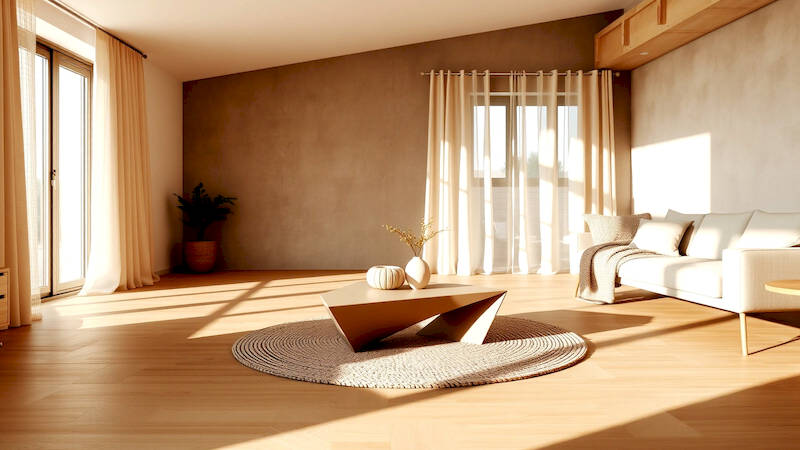
Consider a living room: white walls serve as a neutral canvas. A low, rectangular sofa in a muted gray anchors the space. A triangular coffee table in dark wood provides a contrasting focal point. Above, a pendant light with a hexagonal shade casts geometric shadows on the walls. The flooring is a herringbone pattern in light oak. Against one wall, a series of asymmetrical geometric shelving units display a curated collection of art books and plants. A large geometric mirror on another wall reflects light and expands the space. Decorative accents are minimal – a sculptural metal vase and a few geometric cushions.
This room successfully embodies the principles of geometric minimalism. The shapes are clean and defined, the color palette is restrained, and the overall atmosphere is calm and inviting. The geometric forms add visual interest and dynamism without overwhelming the space. Each element serves a purpose, both functional and aesthetic.
Conclusion: Bringing Order to Simplicity
Integrating geometric shapes into minimalist interior design offers a powerful way to elevate a space beyond mere decluttering. It allows for a sophisticated, visually engaging aesthetic that transcends the potential for starkness inherent in pure minimalism. By understanding the psychology of shapes, applying them thoughtfully to flooring and wall treatments, selecting geometric furniture, utilizing lighting and decorative accents, and carefully considering color palettes, you can create a space that is both calming and stimulating, functional and beautiful.
The key takeaways are to prioritize intention, embrace restraint, and view shapes as architectural elements that define space and enhance the overall aesthetic. Remember that fewer, well-chosen shapes have a greater impact than a cluttered collection. Actionable next steps include analyzing your existing space and identifying opportunities to introduce geometric forms – perhaps by replacing a square coffee table with a triangular one or adding a geometric wall panel. Experiment with color palettes and lighting to create a harmonious and visually appealing environment. Ultimately, the goal is to create a space that reflects your personal style while embodying the principles of minimalist living – clarity, simplicity, and intentionality.
Deja una respuesta