
Maximizing Vertical Storage in Studio Apartments
Studio apartments, by their very nature, present a unique living challenge: condensing a complete life into a compact footprint. While often a more affordable and convenient housing option, particularly in urban areas, the lack of defined spaces demands ingenious storage solutions. Simply acquiring more stuff isn’t an option; instead, the focus must shift to intelligently utilizing the space you have – and that often means looking up. Maximizing vertical storage isn’t just about decluttering; it’s about transforming a potentially cramped environment into a functional, comfortable, and aesthetically pleasing home.
The appeal of studio living is growing. According to a 2023 report by RentCafe, studio apartments are experiencing increased demand, especially among young professionals and students, with rental rates rising faster than larger units in many cities. This trend underscores the need for effective space-saving strategies. Ignoring the potential of vertical space is a critical missed opportunity, leading to cluttered surfaces, a feeling of confinement, and ultimately, a less enjoyable living experience. This article will explore comprehensive strategies for leveraging vertical space in studio apartments, turning walls into valuable storage real estate.
- The Power of Floor-to-Ceiling Solutions
- Utilizing Wall-Mounted Storage Beyond Shelves
- The Often-Overlooked Potential of Vertical Kitchen Storage
- Leveraging Height with Multi-Functional Furniture
- Creative Wall Decor That Doubles as Storage
- Optimizing Closet Space (Even If It’s Small)
- Conclusion: Reclaiming Your Space, Reclaiming Your Life
The Power of Floor-to-Ceiling Solutions
The most dramatic impact on vertical storage comes from embracing floor-to-ceiling solutions. Forget leaving a significant portion of your wall unused – think about installing shelving units that extend as high as is safely possible. This doesn't necessarily mean a single, monolithic bookcase; modular systems allow for customization and flexibility. Consider the types of items you need to store; heavier objects should be placed on lower shelves for stability, while lighter, less frequently used items can occupy the upper reaches. The visual effect of drawing the eye upward can also make the studio feel larger and more spacious.
Choosing the right shelving material is also important. Light-colored wood or metal shelving will feel less bulky than dark, heavy wood. Glass shelves can create an airy feel, but require more careful cleaning. When designing floor-to-ceiling storage, always prioritize safety. Securely anchor shelves to the wall using appropriate hardware – especially crucial in earthquake-prone areas. Furthermore, integrated ladders or step stools are highly desirable for accessing higher shelves without constantly needing a separate appliance. Planning the configuration around existing architectural features like windows and doorways is also crucial for a seamless design.
Finally, don’t underestimate the aesthetic impact. Shelving doesn't just have to be functional; it can be a design statement. Incorporate decorative boxes, baskets, and artwork to break up the monotony of shelving and reflect your personal style. A well-designed vertical storage system can be a focal point of your studio, not just a utilitarian necessity.
Utilizing Wall-Mounted Storage Beyond Shelves
While shelving is a cornerstone of vertical storage, limiting yourself to just shelves significantly reduces your potential. Wall-mounted storage options are incredibly diverse, catering to a wide range of needs. This includes everything from floating cabinets and drawers to pegboards, magnetic knife strips, and even wall-mounted bike racks. Thinking outside the box is crucial – consider utilizing space above doorways, around windows, and even on the backs of doors.
Floating cabinets offer a sleek, modern look and can provide concealed storage for everything from toiletries to office supplies. They can be used in kitchens, bathrooms, or even as bedside tables. Pegboards are incredibly versatile allowing you to customize storage for tools, craft supplies, or kitchen utensils. Magnetic strips are a fantastic space saver in the kitchen, keeping knives and metal utensils neatly organized and within reach. In a studio apartment, every inch of wall space is valuable, so choose solutions that multi-task. For instance, a stylish wall-mounted coat rack with integrated shelving can serve both practical and aesthetic purposes.
Moreover, consider modular wall systems. These systems often include a combination of shelves, cabinets, drawers, and hooks, allowing you to create a customized storage solution that fits your specific needs and space constraints. Ensure any wall-mounted solution is firmly attached to studs for maximum stability and safety.
The Often-Overlooked Potential of Vertical Kitchen Storage
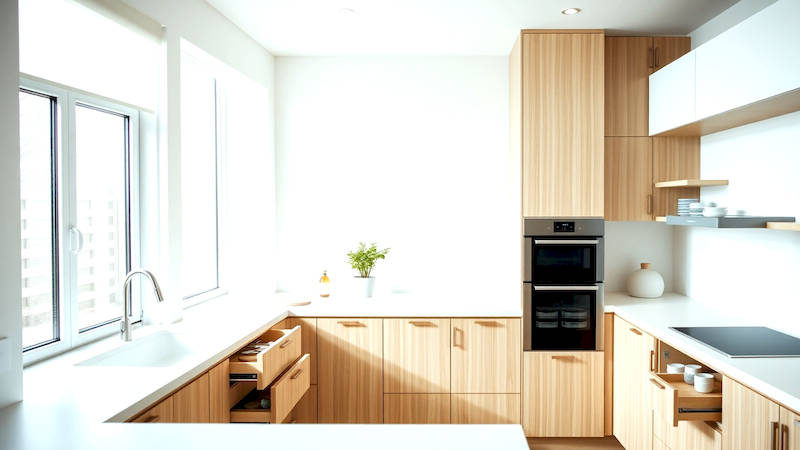
The kitchen in a studio apartment is often the most challenging area to optimize. Counter space is almost always at a premium, meaning vertical storage is paramount. Beyond standard wall cabinets, consider extending cabinets to the ceiling to maximize the available storage height. Internal cabinet organizers, such as pull-out shelves and spice racks, can maximize the usability of the space within the cabinets.
One highly effective solution is to utilize pot racks. Hanging pots and pans from a ceiling-mounted or wall-mounted rack frees up valuable cabinet and drawer space. For smaller kitchens, a magnetic spice rack attached to the refrigerator side or inside a cabinet door can be a lifesaver. Don’t forget the backs of cabinet doors – they’re perfect for hanging measuring cups, spoons, and pot lids. Another clever idea is to install a slim pull-out pantry organizer in a narrow space between the refrigerator and the wall.
“In small kitchens, functionality is king," says interior design expert Sarah Miller. "Prioritizing vertical space and incorporating smart organizers is essential for creating a usable and enjoyable cooking environment." Remember to consider accessibility when designing your kitchen storage; frequently used items should be within easy reach, while less frequently used items can be stored on higher shelves or in hard-to-reach areas.
Leveraging Height with Multi-Functional Furniture
Furniture plays a crucial role in maximizing space in a studio apartment, and multi-functional pieces are your greatest allies. Look beyond traditional furniture designs and embrace items that serve multiple purposes. A prime example is a bed with built-in storage drawers underneath or a storage headboard. Ottomans with hidden storage compartments provide extra seating and concealed storage for blankets, pillows, or books.
Sofa beds are a studio staple, offering seating by day and a sleeping surface by night. However, consider models with integrated storage compartments as well. A tall, narrow bookcase can serve as a room divider, creating a sense of separation while providing valuable storage. Loft beds are a more dramatic solution, elevating the sleeping area above the living space and freeing up significant floor space for a desk, seating area, or dining table. Consider a desk that can fold away when not in use, transforming the space from a workspace into a living area.
When selecting multi-functional furniture, prioritize quality and durability. These pieces will be subjected to frequent use, so it’s important to invest in items that are well-built and can withstand the wear and tear of daily life.
Creative Wall Decor That Doubles as Storage
Wall decor doesn’t have to be purely aesthetic; it can be functional as well. Utilize wall-mounted display shelves to showcase books, artwork, and decorative objects while providing concealed storage behind cleverly placed panels. Install hooks and hangers to create a vertical gallery wall where you can display art, photographs, and even lightweight storage baskets.
Consider utilizing a ladder leaning against the wall as a unique shelving unit. Drape blankets, towels, or clothing over the rungs, or use it to display plants and decorative items. Framed corkboards or whiteboards can serve as both a visual display space and a place to organize notes, calendars, and to-do lists. "The key is to think beyond conventional storage solutions and look for ways to integrate storage into your decor," says design blogger Emily Carter. “A well-curated wall display can be both beautiful and functional.”
Moreover, don't forget about the power of mirrors. Strategically placed mirrors can create the illusion of more space, making your studio feel larger and more open. Consider using mirrored cabinet doors or a large floor-to-ceiling mirror to maximize this effect.
Optimizing Closet Space (Even If It’s Small)
Even a small closet can be significantly optimized with the right strategies. Install a double hanging rod to effectively double your hanging space. Utilize vertical shoe organizers to keep shoes neatly stored and off the floor. Add shelving units above the hanging rods to store sweaters, handbags, and other items.
Utilize shelf dividers to keep stacks of clothing neatly organized and prevent them from toppling over. Consider vacuum storage bags for seasonal clothing or bulky items like comforters and blankets – these bags compress the contents, saving valuable space. Don’t forget about the back of the closet door – it’s a prime location for over-the-door organizers, which can hold shoes, toiletries, or accessories. Regular decluttering is essential for maintaining an organized closet; donate or discard items you no longer use.
Conclusion: Reclaiming Your Space, Reclaiming Your Life
Maximizing vertical storage in a studio apartment isn’t about simply squeezing more things into a small space; it’s about fundamentally rethinking how you utilize your available square footage. By embracing floor-to-ceiling solutions, exploring diverse wall-mounted storage options, optimizing kitchen space, incorporating multi-functional furniture, and creatively integrating storage into your decor, you can transform a potentially cramped studio into a comfortable, functional, and aesthetically pleasing home. Remember that a crucial component of this process is consistent decluttering – removing things you don’t need is often the most effective way to create more space.
The key takeaways are simple: look up, think creatively, and prioritize functionality. Invest in quality, durable storage solutions that will stand the test of time. Don’t be afraid to experiment with different configurations and find what works best for your specific needs and lifestyle. A well-organized studio apartment is not only more visually appealing but also contributes to a calmer, more relaxed, and more productive living environment. Take the time to plan and implement these strategies, and you’ll be amazed at how much space you can unlock within your small footprint.
Deja una respuesta