Optimizing Smart Home Energy Consumption with Usage Analytics
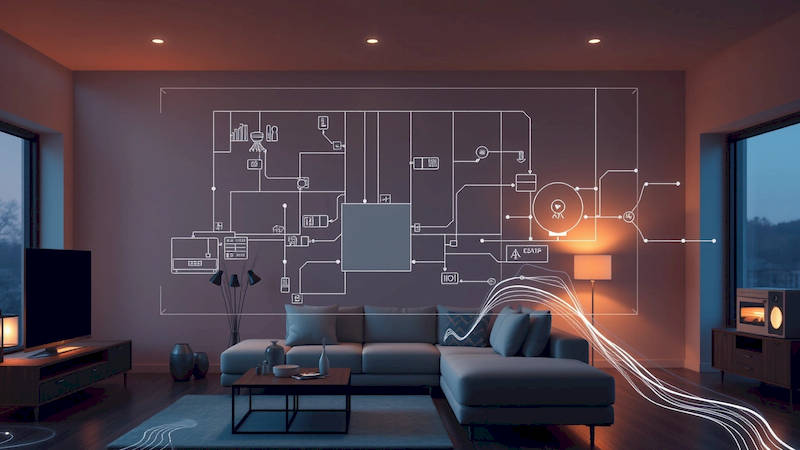
The promise of a smart home extends far beyond convenience; it includes the potential for significant energy savings and a reduced environmental footprint. However, simply installing smart devices – smart thermostats, lighting systems, and appliances – doesn’t automatically translate into lower energy bills. The true power of a smart home lies in its ability to collect data, analyze usage patterns, and proactively optimize energy consumption. This article delves into the world of smart home energy analytics, exploring how homeowners can leverage data insights to create a more efficient, sustainable, and cost-effective living environment. We'll move beyond basic scheduling to genuine, data-driven optimization strategies.
For years, homeowners have relied on general energy-saving tips—turn off lights, unplug electronics, adjust the thermostat. While helpful, these are largely reactive measures. Smart home technology, coupled with sophisticated analytics, offers a proactive approach. It allows you to understand where your energy is going, when it's being used, and why, enabling targeted interventions that yield substantial savings. As energy costs continue to rise and environmental consciousness grows, understanding and utilizing these analytical tools becomes increasingly crucial.
The evolution of energy management is intrinsically linked to data accessibility. Previously, understanding energy consumption required manual meter readings and estimations. Now, smart meters and connected devices provide a continuous stream of detailed data, opening up possibilities for granular analysis and real-time adjustments. This article provides a detailed exploration of how to unlock this potential and transform your smart home into a truly energy-efficient powerhouse.
- Understanding the Data Streams: What Your Smart Home is Telling You
- Interpreting Usage Patterns: Identifying Energy Vampires & Inefficiencies
- Leveraging Smart Scheduling and Automation for Optimized Consumption
- The Power of Voice Control and AI-Driven Optimization
- Integrating with Renewable Energy Sources and Demand Response Programs
- Conclusion: Building a Self-Optimizing Energy Ecosystem
Understanding the Data Streams: What Your Smart Home is Telling You
The foundation of any effective energy optimization strategy is a clear grasp of the data being generated by your smart home devices. This isn’t just about seeing your total kilowatt-hour (kWh) usage; it's about breaking down consumption into specific categories. Most smart home ecosystems – like those offered by Google, Amazon, Apple, and Samsung – offer a central hub or app capable of displaying energy usage data. However, the level of detail can vary significantly. Look for systems that provide per-device monitoring, allowing you to identify energy hogs. Beyond the hub, many individual smart devices also have their own data logs available through dedicated apps.
A critical element often overlooked is the type of data collected. Smart thermostats, for example, record temperature settings, runtime, and ambient temperature. Smart plugs can track energy draw in watts, voltage, and amperage. Smart appliances may provide data on cycle times and energy usage per cycle. Understanding these different data points is essential for accurate analysis. Consider a scenario: a smart plug reveals a “phantom load” from a home entertainment center, drawing 50 watts even when seemingly turned off. This information, easily gleaned from reporting, would have been impossible to determine without granular data collection.
Furthermore, many utilities offer access to detailed energy usage data through online portals, often referred to as “time-of-use” data. This data reveals when you’re using the most energy, factoring in peak and off-peak rates. Integrating this utility data with your smart home system can provide a holistic view of your energy consumption and identify opportunities to shift usage to off-peak hours, significantly lowering your bill.
Interpreting Usage Patterns: Identifying Energy Vampires & Inefficiencies
Raw data, however, is rarely useful on its own. The real value lies in interpreting those data streams to identify anomalies, inefficiencies, and areas for improvement. Most smart home platforms offer some level of automated analysis, potentially flagging unusually high energy consumption or suggesting adjustments based on historical data. However, taking a more hands-on approach to analysis can reveal even more profound insights. Look for patterns: are certain devices consistently consuming more energy than expected? Do energy spikes correlate with specific activities or times of day?
One common area of inefficiency is “phantom load” or “vampire power,” as mentioned earlier. Devices left plugged in, even when turned off, still draw a small amount of power. Identifying these energy drains is crucial. Another common issue is inefficient heating and cooling. Analyzing smart thermostat data can reveal if your home is adequately insulated, if your HVAC system is functioning optimally, and if your temperature settings are aligned with your occupancy patterns. For example, you might realize you're needlessly heating or cooling rooms that are rarely used. “Research conducted by the Lawrence Berkeley National Laboratory suggests that phantom loads can account for as much as 5-10% of a household’s total energy consumption.”
Learning to correlate usage with behavior is key. Perhaps you notice a massive energy spike every evening around 6 pm. Digging deeper, you discover it coincides with the use of an electric vehicle charger. Understanding this connection allows you to explore strategies like scheduling charging during off-peak hours or optimizing charging speed to reduce peak demand.
Leveraging Smart Scheduling and Automation for Optimized Consumption
Once you’ve identified patterns and problem areas, smart scheduling and automation become powerful tools for optimizing energy consumption. Basic scheduling, such as setting your thermostat to lower the temperature while you're away or automatically turning off lights in unoccupied rooms, is a good starting point. However, truly effective automation goes beyond simple time-based rules. It should be dynamic and responsive to real-time conditions and occupancy.
Geofencing is a particularly useful feature. This technology uses your smartphone’s location to determine when you're home or away, automatically adjusting the thermostat, lighting, and other devices accordingly. More advanced systems can integrate with occupancy sensors, further refining automation rules based on actual room usage. For instance, a smart lighting system combined with occupancy sensors can ensure lights are only on in rooms that are currently occupied. Similarly, shades can be automated to open and close based on sunlight intensity and temperature, reducing reliance on heating and cooling systems.
Consider a scenario where a smart home integrates weather data with thermostat control. If the forecast predicts a sunny day, the system might proactively raise the thermostat setpoint, anticipating passive solar heating. If a sudden cold snap is predicted, it could preheat the home before occupants arrive. These types of intelligent adjustments go far beyond simple time-based scheduling, significantly enhancing energy efficiency.
The Power of Voice Control and AI-Driven Optimization
The integration of voice control and artificial intelligence (AI) represents the next frontier in smart home energy management. Voice assistants like Amazon Alexa and Google Assistant allow for hands-free control of smart devices, making it easier to make on-the-fly adjustments and avoid unnecessary energy waste. More importantly, AI algorithms can analyze vast amounts of data to identify subtle patterns and optimize energy consumption in ways that humans simply cannot.
AI can learn your preferences and habits, proactively adjusting settings to maximize comfort and minimize energy use. For example, an AI-powered thermostat might learn that you prefer a slightly warmer temperature in the bedroom and automatically adjust the setting accordingly. Some systems can even predict your energy needs based on historical data and weather forecasts, optimizing energy usage before you even realize it’s necessary. “According to a report by Statista, the global AI in energy market is projected to reach $2.3 billion by 2027, highlighting the growing investment and potential of this technology.”
However, it's crucial to maintain control and transparency. Ensure that you understand how the AI algorithms are making decisions and have the ability to override them if necessary. Avoid “black box” systems where the logic behind the optimization is opaque.
Integrating with Renewable Energy Sources and Demand Response Programs
For homeowners with solar panels or other renewable energy sources, integrating smart home technology with their energy systems can unlock even greater savings. Smart inverters can optimize energy production and storage, maximizing self-consumption of renewable energy and reducing reliance on the grid. Smart home systems can also monitor grid conditions and automatically switch to backup power during outages.
Furthermore, many utilities offer “demand response” programs, which incentivize customers to reduce their energy consumption during peak demand periods. Smart homes can automatically participate in these programs, adjusting energy usage in response to grid signals. This not only saves you money on your energy bill, but also helps to stabilize the grid and reduce the need for expensive peak power plants. Participating in demand response programs can often pay dividends. Data from utility companies demonstrates that customers actively participating in these programs have reported energy bill reductions of up to 20%.
To effectively implement this, ensure your smart home system is compatible with your utility's demand response protocols. Check if your inverter supports grid services and communicates seamlessly with your smart home hub.
Conclusion: Building a Self-Optimizing Energy Ecosystem
Optimizing smart home energy consumption with usage analytics is not a one-time setup; it's an ongoing process of monitoring, analysis, and refinement. By embracing a data-driven approach and actively leveraging the capabilities of your smart home devices, you can achieve substantial energy savings, reduce your carbon footprint, and create a more comfortable and sustainable living environment. The key takeaways are: prioritize detailed data collection, learn to interpret usage patterns, utilize smart scheduling and automation, embrace the power of AI, and integrate with renewable energy sources and demand response programs.
Don't simply rely on automated features; actively monitor your energy usage, experiment with different settings, and continuously refine your strategies. Remember to consult your utility company for available incentives and programs. By treating your smart home not just as a collection of devices, but as a self-optimizing energy ecosystem, you can unlock its full potential and enjoy the benefits of a truly smart and sustainable lifestyle. The future of home energy management is data-driven, and the time to embrace it is now.
Deja una respuesta