
Quick Hacks for Preventing Sticking When Frying Eggs
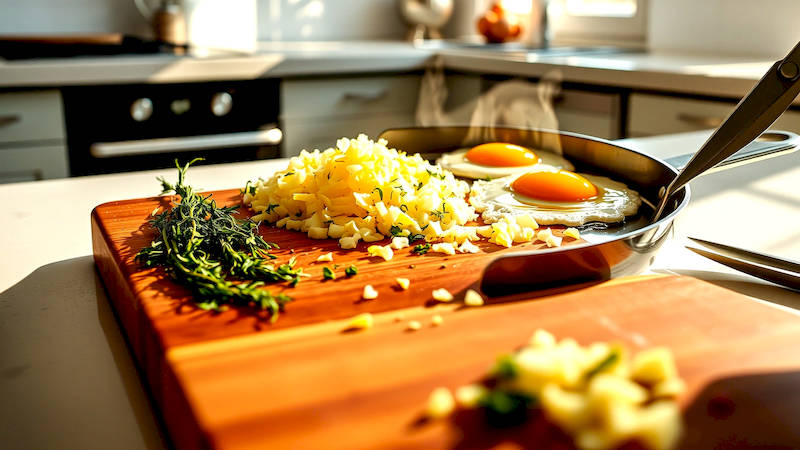
Frying an egg seems like one of the simplest culinary tasks, yet it’s a source of frustration for many home cooks. The promise of a perfectly cooked egg – a set white, a runny yolk, and absolutely no sticking – often dissolves into a scrambled mess aggressively adhered to the pan. But achieving that ideal fried egg isn’t about luck; it’s about understanding the science behind sticking and employing a few key techniques. This article will delve into the reasons eggs stick, debunk common myths, and provide you with a comprehensive arsenal of quick hacks to effortlessly create flawless fried eggs every time. We’ll move beyond basic non-stick recommendations and explore the nuances of heat control, fat utilization, and even the role of egg freshness.
The annoyance of a stuck egg extends beyond just a messy cleanup. It affects the texture and presentation of the dish, potentially ruining what could have been a perfect breakfast, brunch, or even a quick dinner. Moreover, the scrapage not only wastes food, but also potentially damages your pan’s surface, especially if you’re dealing with more delicate materials. Mastering the art of the no-stick fry is about respecting your ingredients, your cookware, and your time, ultimately elevating your cooking experience.
This guide focuses entirely on preventing sticking during the frying process, and assumes you’re starting with a standard frying pan – whether non-stick, stainless steel, cast iron, or ceramic. We will explore practical solutions that work across various pan types, implying that a costly pan upgrade isn’t always necessary to achieve excellent results. From adjusting your cooking temperature to utilizing surprising kitchen staples, you’ll find a range of effective strategies to conquer the common problem of eggs sticking to the pan.
- The Science of Sticking: Why Eggs Cling to Your Pan
- The Fat Factor: Choosing and Using Your Lubricant
- Temperature Control: The Cornerstone of No-Stick Success
- The Water Trick: A Surprisingly Effective Hack
- Beyond the Pan: Egg Preparation and Freshness
- Concluding Summary: Your Path to Perfect Fried Eggs
The Science of Sticking: Why Eggs Cling to Your Pan
The primary reason eggs stick is due to protein coagulation. Eggs contain proteins that, when heated, unfold and then bond together, forming a solid structure. This is how an egg actually cooks. However, this process also creates an adhesive bond between the egg proteins and the surface of the pan. The stronger that bond, the more stubbornly the egg clings. This is exacerbated when the pan's surface isn’t sufficiently lubricated or properly heated, providing more opportunity for those proteins to grab hold. The type of pan material also plays a crucial role; rougher surfaces offer more points of contact and therefore a stronger adhesive potential.
Furthermore, the initial temperature of both the pan and the egg significantly impacts sticking. A cold pan allows the egg proteins more time to bond directly to the metal before proper coagulation occurs, resulting in a significant mess. Similarly, a super-hot pan causes immediate and rapid protein coagulation, often leading to a burnt and stuck-on layer. The ideal scenario involves a pan that’s adequately heated before the egg is added, creating a barrier between the proteins and the pan surface. Consider a study by food science researchers at Iowa State University who found that preheating a stainless steel pan to around 350°F, then adding fat, dramatically reduced egg sticking compared to starting with a cold pan.
Finally, the freshness of the egg itself is a factor, though often an overlooked one. Older eggs have thinner whites, which spread more easily and have a greater surface area for bonding. Fresher eggs with thicker whites maintain their shape better, and have a smaller contact area with the pan, reducing the likelihood of sticking. This doesn't mean you can’t fry older eggs; it just requires extra attention to temperature and lubrication, as discussed in subsequent sections.
The Fat Factor: Choosing and Using Your Lubricant
Fat isn't just about flavor, it acts as a crucial barrier, preventing direct contact between the egg and the pan’s surface. However, not all fats are created equal when it comes to preventing sticking. Butter, oil, and even bacon grease all have varying properties. Butter, while adding fantastic flavor, has a lower smoke point and can burn easily, which – ironically – increases the likelihood of sticking. Olive oil, especially extra virgin, also has a relatively low smoke point and can impart an undesirable flavor to the eggs.
Refined oils, such as avocado oil, canola oil, or vegetable oil, are excellent choices due to their higher smoke points and neutral flavor profiles. These oils can withstand higher temperatures without breaking down and becoming sticky themselves. When applying the fat, ensure you coat the entire cooking surface evenly. A common mistake is simply pouring the oil into the center of the pan; spread it around with a paper towel or swirl the pan to ensure complete coverage. Another handy tip is to add a small amount of fat after the pan has begun to heat up. This prevents the fat from breaking down too quickly.
Beyond the type of oil, the amount of fat matters. A too-thin layer might not provide sufficient separation; a too-thick layer can create a greasy, unpleasant texture. A good rule of thumb is to use approximately 1-2 teaspoons of oil for a standard 8-inch frying pan, adjusting according to the number of eggs you’re cooking. Experimentation is key to finding the optimal balance that works for your pan and stove.
Temperature Control: The Cornerstone of No-Stick Success
As mentioned earlier, temperature is arguably the most critical factor in preventing sticking. Rushing the process or using excessively high heat is a recipe for a stuck-on mess. The ideal procedure involves preheating the pan over medium-low to medium heat. How do you know when it's ready? A simple test is to flick a tiny drop of water into the pan. If it sizzles and instantly evaporates, the pan is too hot. If it beads up and dances around for a few seconds before evaporating, it’s reaching the correct temperature.
Once the pan reaches the proper temperature, add your fat (as discussed in the previous section). Allow the fat to heat up for a few seconds, shimmering but not smoking. Then gently add your egg(s). Lowering the heat slightly after adding the egg can provide further control and prevent scorching. This nuanced approach allows the egg white to begin coagulating gradually, forming a barrier before it can stick. Don’t be tempted to rush the process by cranking up the heat; patience is rewarded with a perfectly cooked, beautifully released egg.
Consider this: a professional chef’s technique often involves a lower, slower cook. They prioritize even cooking and minimize sticking by meticulously controlling the heat. Trying to replicate that level of control at home will significantly improve your egg-frying results.
The Water Trick: A Surprisingly Effective Hack
One lesser-known, yet highly effective hack, is the "water trick." Before adding your fat, add a teaspoon or two of water to the preheated pan. The water will sizzle and evaporate almost instantly, creating a thin layer of steam that coats the pan. This steam acts as a temporary non-stick barrier, reducing the initial contact between the egg and the pan.
Following the water, immediately add your fat and proceed as usual. The residual moisture helps to create a slick surface. This technique works particularly well with stainless steel pans, which are notoriously prone to sticking. It's a relatively simple adjustment to your routine, with the potential to yield significant improvement.
The science behind this trick lies in the Leidenfrost effect, where a liquid coming into contact with a surface significantly hotter than its boiling point creates an insulating vapor layer. Although the effect is brief, it’s enough to mitigate initial sticking.
Beyond the Pan: Egg Preparation and Freshness
While pan temperature and fat choice are paramount, don’t neglect the preparation of the egg itself. Crack the egg into a small bowl before adding it to the pan. This allows you to inspect the egg for shell fragments and also ensures a gentler introduction to the hot surface. Dropping an egg directly from its shell can create splashing and uneven cooking, potentially increasing sticking.
As previously touched upon, egg freshness matters. Use the float test to determine freshness: place the egg in a bowl of water. If it sinks and lays flat, it’s very fresh. If it sinks but stands on one end, it's still usable but not at its peak. If it floats, it’s likely past its prime and more prone to sticking. Fresher eggs possess thicker albumen which holds shape better, reducing surface contact.
Finally, avoid overcrowding the pan. Trying to fry too many eggs simultaneously lowers the pan's temperature and increases the risk of sticking. Work in batches if necessary to ensure proper cooking and prevent a sticky situation.
Concluding Summary: Your Path to Perfect Fried Eggs
Mastering the art of the no-stick fried egg is achievable for anyone, regardless of their cooking experience. It's about understanding the underlying science – protein coagulation, heat transfer, and the role of lubrication – and applying a few key techniques. Remember to prioritize precise temperature control, opting for medium-low to medium heat and preheating the pan thoroughly. Choose a high smoke point oil like avocado or canola oil, ensuring even coverage of the cooking surface. Don't underestimate the power of the water trick, especially for notoriously sticky stainless steel pans.
The key takeaways are these: preheat patiently, lubricate generously, and cook gently. Paying attention to egg freshness and avoiding overcrowding will further enhance your success. Embrace experimentation to find the optimal balance of heat, fat, and timing for your specific pan and stove. By consistently implementing these hacks, you’ll transform from fearing the stuck egg to confidently creating perfectly fried eggs every time, enjoying a delicious and fuss-free start to your day. Next time you reach for the eggs, remember that a little knowledge and a few simple adjustments can make all the difference.
Deja una respuesta