
How to Create Custom Energy Usage Reports with Smart Meters
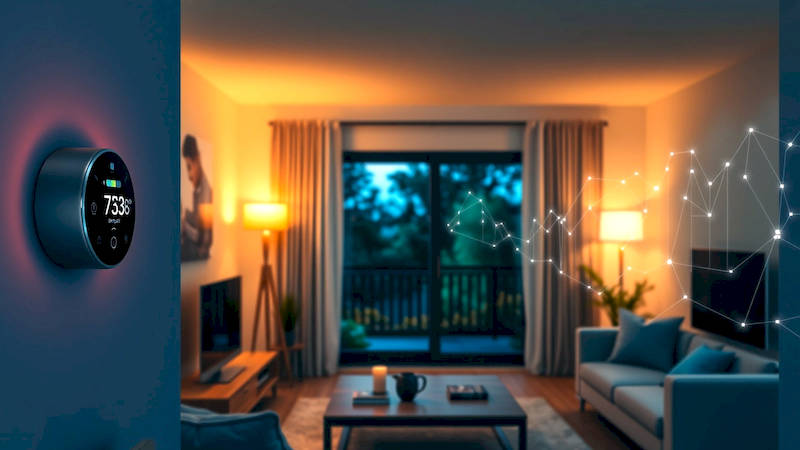
The proliferation of smart meters represents a fundamental shift in how we interact with energy. No longer are we passive recipients of a monthly bill; instead, we have the power to access granular data about our consumption, identifying patterns and opportunities for optimization. However, raw data alone is rarely insightful. The real value lies in transforming this data into customizable reports that reveal precisely what’s impacting your energy bill. This article will delve into the process of creating these reports, exploring the tools, techniques, and nuances involved in harnessing the full potential of your smart meter data for significant energy savings and a more sustainable lifestyle. We’ll move beyond simply seeing your usage to understanding it and acting accordingly.
For decades, homeowners have been largely in the dark about their energy consumption, relying on monthly bills that offer a retrospective overview—often too late to make meaningful adjustments. Smart meters change this dynamic. They provide near real-time data on electricity (and sometimes gas or water) usage, opening up a new world of possibilities for energy management. But access to data doesn’t automatically translate into savings. The key lies in extracting, analyzing, and presenting this data in a way that’s both informative and actionable. Creating custom usage reports empowers you to become an informed energy consumer, leading to lower bills, reduced environmental impact, and a more comfortable home.
Finally, understanding the capabilities of your smart meter, and the reporting options available will require a little detective work. Utility companies offer varying levels of data access and reporting tools. Some provide comprehensive online portals, while others offer limited functionalities. This article will guide you through navigating these options and leveraging third-party tools when necessary to maximize the insights derived from your smart meter data. We aim to equip you with the knowledge to not just react to your energy bill, but to proactively manage your energy future.
- Understanding Your Smart Meter Data & Access Options
- Choosing the Right Tools for Report Generation
- Defining Your Reporting Requirements: What Do You Want to Know?
- Building Your Custom Reports: Practical Steps & Techniques
- Analyzing Your Reports & Identifying Energy Saving Opportunities
- Beyond the Bill: Leveraging Data for Behavioral Changes
- Conclusion: Empowering Your Energy Future
Understanding Your Smart Meter Data & Access Options
The first step toward creating custom energy usage reports is understanding the data your smart meter collects and how to access it. Smart meters record energy consumption in short intervals—typically 15 minutes or hourly—providing a detailed picture of your usage patterns. This detailed data is a significant improvement over the previous method of estimated readings, allowing you to identify specific energy hogs and peak consumption times. Beyond total kilowatt-hour (kWh) usage, smart meter data can also reveal voltage information, power factor, and in some cases, reactive power, offering a more nuanced understanding of your energy profile.
Access to this data varies significantly depending on your utility provider. Many utilities offer online portals or mobile apps where you can view your usage data, often presented in graphical form. These portals typically allow you to view daily, weekly, or monthly consumption, and may offer basic reporting features, such as comparing your usage to previous periods or to similar households. However, the level of customization offered by these utility portals is often limited. Some utilities provide a data download option, allowing you to export your usage data in a comma-separated value (CSV) format, enabling you to analyze the data using spreadsheet software like Microsoft Excel or Google Sheets.
For those seeking more granular control and advanced analysis, third-party apps and services are available. These platforms often connect directly to your smart meter (with your permission, of course) and offer a wider range of reporting features, including the ability to create custom reports based on specific criteria, track energy costs, and identify energy-saving opportunities. However, it’s vital to carefully research any third-party service to ensure its data security and privacy practices align with your comfort level. Consider reading reviews and checking for certifications to ensure a reputable provider.
Choosing the Right Tools for Report Generation
Once you’ve established how to access your smart meter data, the next step is selecting the appropriate tools for report generation. The choice depends largely on your technical skills, the complexity of the reports you want to create, and your budget. For basic reporting, your utility’s online portal might suffice, offering pre-defined charts and graphs that highlight key trends. However, for more sophisticated analysis, spreadsheet software like Excel or Google Sheets provides considerable flexibility. You can import your CSV data and create custom charts, formulas, and pivot tables to analyze consumption patterns in detail.
Excel and Google Sheets require some level of data manipulation skills. You'll need to understand how to filter data, create calculations, and generate visualizations. There are numerous online tutorials and resources available to help you learn these skills. Several smart home energy management platforms like Sense, Curb or Emporia Energy offer more automated reporting features. These platforms often integrate directly with your smart meter and provide a user-friendly interface for creating custom reports, tracking energy costs, and identifying energy-saving opportunities. These services typically come with a subscription fee, but they can save you significant time and effort.
Finally, for users with programming experience, Python offers the most powerful and flexible option. Libraries like Pandas and Matplotlib allow you to import, manipulate, and visualize data with virtually unlimited customization options. This approach requires a steeper learning curve but provides the greatest control over the reporting process. Consider your comfort level with each option and choose the tool that best aligns with your needs and capabilities.
Defining Your Reporting Requirements: What Do You Want to Know?
Before diving into data analysis, it’s crucial to define your reporting requirements. What specific questions are you trying to answer with your energy usage data? Are you trying to identify which appliances consume the most energy? Are you interested in tracking the impact of energy-saving measures, such as installing LED lighting or upgrading your insulation? Defining your objectives will guide the rest of the reporting process.
Consider breaking down your energy usage into different categories. For example, you might create reports that focus on whole-house consumption, as well as separate reports for specific areas of your home, such as the kitchen, living room, or bedrooms. You could also create reports that focus on specific appliances, such as your air conditioner, refrigerator, or washing machine. Develop a list of Key Performance Indicators (KPIs) to track over time. Common KPIs include total energy consumption (kWh), peak demand (kW), average daily consumption, and cost per kWh. Prioritize variables you can control, such as appliance usage, thermostat settings, and standby power consumption.
Think about the time frame you want to analyze. Do you want to see daily, weekly, monthly, or annual trends? Analyzing data over different time periods can reveal valuable insights. For example, you might notice that your energy consumption spikes during certain times of the day or on specific days of the week. Understanding these patterns will help you identify opportunities for optimization.
Building Your Custom Reports: Practical Steps & Techniques
With your tools selected and your reporting requirements defined, it's time to build your custom reports. If you're using spreadsheet software, start by importing your smart meter data into a new worksheet. Clean the data by removing any errors or inconsistencies. Then, use formulas and pivot tables to calculate the KPIs you defined earlier. For example, you can use the SUM function to calculate total energy consumption, the AVERAGE function to calculate average daily consumption, and the MAX function to identify peak demand.
Spreadsheet charts are powerful visualization tools. Experiment with different chart types—line charts, bar charts, pie charts—to find the ones that best represent your data. Use clear labels and titles to make your charts easy to understand. If you're using a smart home energy management platform, the report creation process is typically more streamlined. These platforms often provide pre-built templates and drag-and-drop interfaces that make it easy to create custom reports.
Remember to focus on presenting the data in a clear and concise manner. Avoid overwhelming your reports with too much information. Highlight the key findings and use visualizations to communicate the most important trends. Consider adding annotations to your charts to explain any significant events or anomalies. For example, you might annotate a spike in energy consumption to indicate that you were running your air conditioner on a particularly hot day.
Analyzing Your Reports & Identifying Energy Saving Opportunities
Creating the reports is only half the battle; the real value comes from analyzing the results and identifying opportunities to save energy. Look for patterns and trends in your data. Are there specific times of the day or days of the week when your energy consumption is particularly high? Are there certain appliances or areas of your home that are consuming a disproportionate amount of energy? Are there any unexpected spikes or anomalies in your data?
Once you've identified potential areas for improvement, investigate further. For example, if you notice that your air conditioner is consuming a lot of energy, check the thermostat settings and ensure that your air conditioner is properly maintained. If you suspect that an appliance is drawing power even when it's turned off, unplug it and check your smart meter to see if your energy consumption decreases. Energy audits can be very helpful here, providing a professional assessment of your home’s energy performance.
Don't underestimate the impact of small changes. Simple measures like switching to LED lighting, improving your insulation, and sealing air leaks can all add up to significant savings over time. Track the impact of your energy-saving measures by comparing your energy usage before and after implementing them. For example, you can create a report that shows your energy consumption for the month before and the month after installing LED lighting.
Beyond the Bill: Leveraging Data for Behavioral Changes
Custom energy reports aren't just about identifying technical fixes; they are powerful tools for changing behavior. Once you become aware of your energy consumption patterns, you're more likely to make conscious decisions to reduce your usage. Sharing your reports with family members can also raise awareness and encourage collective energy-saving efforts.
Consider gamifying the process. Set energy-saving goals and reward yourselves when you achieve them. Many smart home platforms include features that allow you to track your progress and compete with other users. However, be mindful of the “rebound effect” — the tendency to offset energy savings with increased consumption in other areas. For example, if you save money on your energy bill by installing solar panels, you might be tempted to purchase a new energy-intensive appliance.
Finally, use your data to advocate for energy efficiency in your community. Share your findings with your neighbors, participate in local energy-saving initiatives, and contact your utility provider to suggest ways to improve energy efficiency programs.
Conclusion: Empowering Your Energy Future
Creating custom energy usage reports with smart meters is a powerful step toward taking control of your energy consumption and becoming a more sustainable consumer. From understanding your data access options to actively analyzing your reports for actionable insights, the process empowers you to identify energy-saving opportunities, reduce your environmental impact, and lower your utility bills. The tools available – from basic utility portals to advanced programming languages – offer a spectrum of options to suit varying levels of technical expertise.
The key takeaways are clear: regularly monitor your energy usage through customized reports; identify and address energy hogs; adopt energy-efficient behaviors; and continually track your progress. Don't view your smart meter as simply a device for reading your bill – see it as a portal to understanding your energy future and taking the necessary steps to shape it for a more efficient and sustainable tomorrow. The data is there; it’s time to decode it and make it work for you.
Deja una respuesta