
Creating Energy-Saving Automation Routines with Your Smart Home Hub
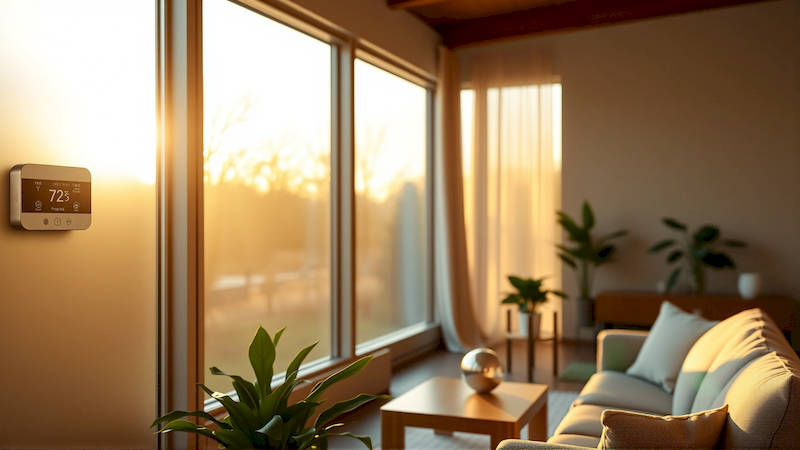
The promise of a smart home extends far beyond convenience – it offers the potential for significant energy savings and a reduced environmental footprint. As energy costs continue to rise and concerns about climate change grow, leveraging the capabilities of a smart home hub to automate energy-conscious behaviors is becoming increasingly vital. Many homeowners are unaware of the extent to which they can optimize their energy consumption through strategically designed automation routines. This article will delve into the strategies, technologies, and practical steps for creating energy-saving automation routines with your smart home hub, transforming your house into a more efficient and sustainable living space.
Modern smart home hubs act as the central nervous system for a network of connected devices. These hubs – from industry leaders like Samsung SmartThings, Hubitat Elevation, and Amazon Echo (when used in conjunction with compatible devices) – allow devices to communicate with each other, creating a cohesive and responsive home environment. While many users initially focus on the convenience aspects (voice control, remote access), the power to schedule and automate actions based on environmental factors and personal routines is where the true energy-saving potential lies. Harnessing this potential requires a thoughtful approach, considering your specific needs, dwelling characteristics, and energy usage patterns.
- Understanding Your Energy Consumption: The Foundation of Automation
- Automating Lighting for Maximum Efficiency
- Smart Thermostat Optimization: Intelligent Climate Control
- Appliance Control and Phantom Load Reduction
- Leveraging Sensors for Adaptive Automation
- Optimizing for Seasonal Changes and Occupancy Patterns
- Conclusion: A Smart Path to Sustainable Living
Understanding Your Energy Consumption: The Foundation of Automation
Before diving into creating automation routines, it's crucial to understand where your energy is being used. A surprisingly large percentage of household energy consumption is often invisible – phantom loads from devices left plugged in, inefficient heating/cooling practices, or appliances running at suboptimal settings. Investing in a whole-home energy monitor, like Sense or Emporia Vue, provides granular data on energy usage across different circuits, helping you identify the biggest energy drains. Even without a dedicated monitor, reviewing your monthly electricity bills and paying attention to seasonal variations in usage will offer valuable insights.
The data collected from energy monitoring tools, or even careful bill analysis, informs the creation of targeted automation routines. For example, discovering that your entertainment center consumes a significant amount of power even when “off” could prompt you to create a routine that completely cuts power to that circuit at night or when you’re away. Similarly, identifying peak energy usage during specific times of day can guide scheduling adjustments for energy-intensive appliances like washing machines and dishwashers. This initial assessment is the difference between implementing random smart features and creating a genuinely impactful energy-saving system.
Finally, consider the impact of passive energy factors. Drafty windows, poor insulation, and inefficient lighting all contribute to higher energy bills. Addressing these issues alongside smart automation provides a holistic energy-saving solution.
Automating Lighting for Maximum Efficiency
Lighting is a prime candidate for smart home automation and a relatively easy place to start saving energy. Traditional lighting often remains on unnecessarily, even in unoccupied rooms. Smart bulbs, paired with motion sensors and your smart home hub, can create a system where lights automatically turn on when a room is entered and off when it’s vacant. This isn’t just about convenience; it's about eliminating wasted energy.
Beyond simple occupancy sensing, you can create more sophisticated lighting routines. For example, you could program lights to dim gradually as ambient light increases during the day, reducing reliance on artificial illumination. Integrating your smart lighting with sunrise and sunset times allows you to automatically adjust lights to mimic natural daylight, enhancing both comfort and energy savings. Furthermore, grouping lights and controlling them collectively through your hub allows for standardized energy-saving behaviors. “All lights off” scenes for bedtime or when leaving the house can be easily activated.
A particularly effective strategy involves combining smart bulbs with smart shades or blinds. Automating the shades to open during the day to maximize natural light, and close during the hottest parts of the day in the summer (or at night in the winter), reduces the need for artificial lighting and helps regulate indoor temperature.
Smart Thermostat Optimization: Intelligent Climate Control
Smart thermostats, like Nest, Ecobee, and Honeywell Home, are arguably the superstars of energy-saving smart home technology. Traditional thermostats, even programmable ones, often rely on preset schedules, which don’t account for variations in occupancy or weather conditions. Smart thermostats learn your habits and preferences, automatically adjusting the temperature to optimize comfort and efficiency.
However, the true potential of a smart thermostat is unlocked when integrated with your broader smart home ecosystem. For example, you can create a routine that lowers the thermostat when you leave for work, and starts pre-heating or cooling the house before you arrive home. Geofencing, utilizing your smartphone's location, is a powerful tool in this context, ensuring the thermostat only adjusts based on your actual presence. Combining thermostat control with window/door sensors adds another layer of intelligence: if a window is left open, the system can temporarily pause heating or cooling to prevent energy waste.
Furthermore, many smart thermostats integrate with weather forecasts, proactively adjusting the temperature to minimize energy consumption during periods of extreme heat or cold. Expert energy consultant, Sarah Jenkins, notes, “A well-programmed smart thermostat can yield energy savings of up to 20% annually, simply by intelligently managing your HVAC system.”
Appliance Control and Phantom Load Reduction
Appliances, even when turned "off," can continue to draw power – this is known as phantom load or vampire power. Smart plugs offer a simple yet effective solution. By plugging appliances into smart plugs, you can remotely turn them off and schedule them to operate only when needed. This is particularly beneficial for devices like TVs, game consoles, and chargers, which often consume significant standby power.
Beyond basic on/off control, some smart plugs offer energy monitoring capabilities, providing insights into the actual power consumption of connected appliances. This data can help you identify energy hogs and adjust your usage accordingly. Consider creating routines that automatically turn off appliances during peak hours or when you’re away on vacation. For example, a routine could disable power to the coffee maker and toaster during work hours, eliminating unnecessary standby power drain.
Load shifting is another powerful tactic. Smart plugs can also control appliances like washing machines, dryers, and dishwashers, scheduling them to run during off-peak hours when electricity rates are lower. This strategy not only saves energy but also reduces your overall electricity bill.
Leveraging Sensors for Adaptive Automation
The true power of a smart home lies in its ability to react to real-time conditions. Sensors are the eyes and ears of your smart home, providing the data needed to create truly adaptive automation routines. Beyond motion and door/window sensors, consider incorporating temperature, humidity, and even air quality sensors.
For example, a humidity sensor in your bathroom could trigger the exhaust fan automatically when humidity levels rise, preventing mold growth and conserving energy by only running the fan when needed. Similarly, a temperature sensor in a specific room could trigger a smart fan or window opener, reducing reliance on air conditioning. Integrating sensors with your smart thermostat can create a multi-faceted climate control system that responds to both occupancy and environmental factors.
Air quality sensors can also be integrated into your routines. For instance, if the air quality drops below a certain threshold, the system could automatically activate an air purifier and close windows and vents. Combining knowledge from different sensors gives your smart home a “sixth sense” when it comes to energy efficiency.
Optimizing for Seasonal Changes and Occupancy Patterns
Effective energy-saving automation isn't a one-size-fits-all solution; it requires ongoing adjustments based on seasonal changes and your evolving occupancy patterns. In the spring and fall, you might prioritize maximizing natural ventilation, while in the summer you'll focus on keeping the house cool and in the winter on retaining heat.
Creating multiple "scenes" or automation profiles for different seasons allows you to quickly adapt to changing conditions. For example, a "Summer Cooling" scene could automatically close blinds during the hottest part of the day, lower the thermostat, and turn on ceiling fans. A “Winter Heating” scene could open blinds to capture solar heat during the day, lower the thermostat at night, and ensure windows are securely closed.
Further optimizing your routines involves analyzing your occupancy patterns. If you frequently work from home, your energy consumption profile will differ significantly from someone who's away all day. Adjust your automation routines accordingly, making sure they reflect your actual lifestyle and usage habits.
Conclusion: A Smart Path to Sustainable Living
Creating energy-saving automation routines with your smart home hub is a powerful step towards a more sustainable and cost-effective lifestyle. By understanding your energy consumption, leveraging the capabilities of smart devices, and integrating sensors for adaptive control, you can significantly reduce your environmental footprint and lower your energy bills. The initial investment in smart home technology is offset by long-term savings and the added convenience of a responsive, intelligent living space.
Key takeaways include the importance of data-driven automation, the strategic use of scheduling and geofencing, and the continuous optimization of routines based on seasonal changes and occupancy patterns. Start small, focus on areas with the highest potential for savings (lighting, thermostats, appliances), and gradually expand your automation ecosystem. Ultimately, a smart home isn't just about convenience; it’s about empowering you to live more consciously and responsibly, contributing to a more sustainable future. Take the time to analyze your home's energy usage, experiment with different routines, and unlock the full potential of your smart home hub to create a truly energy-efficient living environment.
Deja una respuesta