
Integrating Smart Lighting with Voice Assistants for Hands-Free Control
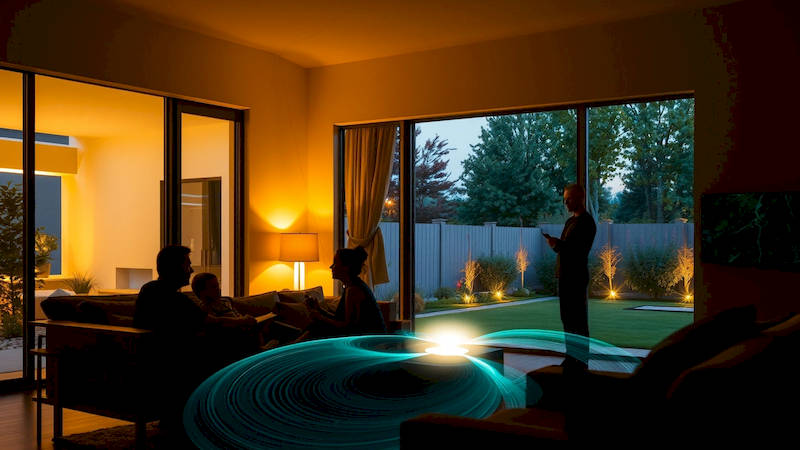
The rise of the smart home has fundamentally altered how we interact with our living spaces. No longer are homes simply shelters; they're dynamic ecosystems responding to our needs, anticipating our preferences, and offering unprecedented levels of convenience. At the heart of this transformation lies smart lighting - a surprisingly powerful technology that goes beyond simply turning lights on and off. When coupled with the seamless control offered by voice assistants like Amazon Alexa, Google Assistant, and Apple Siri, smart lighting evolves into a truly transformative experience, offering enhanced comfort, security, and energy efficiency. This article dives deep into the world of voice-activated smart lighting, exploring the benefits, integration methods, troubleshooting tips, and future trends.
The initial investment in smart lighting can seem daunting, however, the benefits quickly outweigh the costs. Beyond mere convenience, smart lighting offers substantial energy savings by allowing precise control over brightness and usage patterns. It also adds a powerful layer of security by simulating occupancy when you're away, and creating automated routines that enhance your peace of mind. Moreover, the ability to customize lighting scenes – from "Movie Night" to “Reading Mode” – dramatically improves the ambiance and functionality of every room. As voice assistant technology continues its rapid evolution, integrating it with your smart lighting system provides a natural and intuitive way to manage your home environment, making everyday tasks simpler and more enjoyable.
- Understanding the Ecosystem: Smart Lighting Technologies & Protocols
- Choosing Your Voice Assistant: Alexa, Google Assistant, and Siri
- The Integration Process: Connecting Lights and Assistants
- Mastering Voice Commands: Beyond On and Off
- Security and Privacy Considerations with Smart Lighting
- The Future of Smart Lighting: AI-Powered Ambiance and Dynamic Scenes
- Conclusion: Embracing the Illuminated Future
Understanding the Ecosystem: Smart Lighting Technologies & Protocols
Before diving into voice assistant integration, it’s crucial to understand the diverse landscape of smart lighting technologies. Beyond the basic function of remote control, smart lights offer features like dimming, color changing (RGB), scheduling, and geofencing capabilities. The core technology underpinning these lights largely falls into two categories: those that communicate directly via Wi-Fi and those utilizing a hub-based protocol like Zigbee or Z-Wave. Wi-Fi bulbs are easy to set up, connecting directly to your home network, but can potentially strain bandwidth and are often less energy-efficient. Hub-based systems, while requiring an initial investment in a hub, offer superior reliability, wider range, and reduced network congestion.
The choice between these technologies hinges on factors like the size of your home, the number of smart devices you intend to use, and your technical comfort level. Zigbee and Z-Wave create a mesh network where devices relay signals, extending the range and improving stability, particularly useful for larger homes. Furthermore, these protocols typically consume less power, leading to longer battery life for sensor-equipped lights. Leading brands like Philips Hue, Samsung SmartThings, and Aqara utilize Zigbee, while LIFX and TP-Link Kasa commonly employ Wi-Fi. Consider the existing smart home ecosystem you're invested in; sticking with compatible protocols will streamline integration and avoid interoperability issues.
It’s also important to consider the type of bulbs and fixtures you require. While many smart lighting solutions focus on standard A19 bulbs, options extend to BR30 spotlights, candelabra bulbs, light strips, and even outdoor lighting. Exploring the range of options available beyond basic bulbs will unlock the full potential of your smart lighting implementation.
Choosing Your Voice Assistant: Alexa, Google Assistant, and Siri
The selection of a voice assistant significantly impacts the overall experience of hands-free lighting control. Amazon Alexa, with its extensive third-party compatibility, boasts the largest ecosystem and often provides the broadest range of skills and integrations. Google Assistant excels in conversational AI and contextual awareness, understanding more nuanced commands and seamlessly integrating with Google’s suite of services. Apple's Siri, deeply entrenched in the Apple ecosystem, prioritizes privacy and offers tight integration with HomeKit-enabled devices.
Each assistant has its strengths and weaknesses. Alexa generally requires more explicit commands, while Google Assistant is more forgiving with natural language. Siri, while improving, can sometimes struggle with complex requests or less common device integrations. Consider your existing devices and brand preferences when making your choice. If you’re already heavily invested in Apple products, Siri and HomeKit may be the most logical choice. If you value ease of use and broad compatibility, Alexa is a strong contender. Google Assistant strikes a balance between sophistication and accessibility.
Beyond the core functionality, consider the assistant’s features related to routines and scene creation. All three platforms allow you to create custom routines that trigger multiple actions with a single voice command, such as "Goodnight," which could turn off all the lights, lock the doors, and adjust the thermostat. The complexity and flexibility of these routines vary between platforms, impacting the level of customization you can achieve.
The Integration Process: Connecting Lights and Assistants
The integration process generally involves a few straightforward steps. First, you’ll need to set up your smart lights according to the manufacturer’s instructions, typically involving downloading a companion app and connecting the bulbs to your Wi-Fi network or hub. Once the lights are connected, you’ll need to enable the corresponding skill or action within your chosen voice assistant’s app. For instance, with Alexa, you’ll search for the Philips Hue skill and link your Hue account. With Google Assistant, you’ll link your Hue account through the “Works with Google” service. Apple HomeKit integration require adding devices through the Home app after ensuring compatibility.
After linking accounts, the voice assistant will discover your smart lights. You'll then need to assign descriptive names to each light, for example, "Living Room Lamp" or "Kitchen Overhead." This naming convention is crucial for accurate voice commands. Following the initial setup, you should be able to control your lights with simple voice commands like “Alexa, turn on the Living Room Lamp” or “Hey Google, dim the Kitchen Overhead to 50%.”
Troubleshooting often involves checking the network connection, ensuring the lights are properly paired with the hub (if applicable), and verifying that the skill or action is enabled and linked correctly. Regularly updating the firmware for both the lights and the voice assistant can also resolve compatibility issues and unlock new features.
Mastering Voice Commands: Beyond On and Off
Effective voice control extends far beyond simply turning lights on and off. Most voice assistants support a wide range of commands, including dimming, brightening, color changing, and scene activation. Experiment with variations in phrasing to discover what works best for your assistant. For example, instead of "Alexa, set the Living Room Lamp to blue," you could try "Alexa, change the Living Room Lamp to a relaxing blue color."
Leverage the power of grouping to control multiple lights simultaneously. You can create groups like "Downstairs Lights" or "Bedroom" to control all the lights within a specific area with a single command. Routines become invaluable for automating complex lighting scenarios. Create a "Movie Night" routine that dims the lights, sets a warm color temperature, and activates a specific scene. Integrating geofencing adds another layer of automation, automatically turning on the porch light when you arrive home.
Don’t underestimate the power of personalized commands and aliases. If you find a specific command cumbersome, you can often create custom aliases to simplify it. For example, you might alias “Turn on the upstairs hallway light” to “Hallway.”
Security and Privacy Considerations with Smart Lighting
While offering undeniable convenience, smart lighting systems, like any connected device, introduce potential security and privacy concerns. It’s crucial to secure your home network with a strong password and enable two-factor authentication whenever possible. Regularly update the firmware of your smart lights and voice assistant to patch security vulnerabilities.
Be mindful of the permissions you grant to third-party skills and actions. Review the privacy policies of the manufacturers and understand what data they collect and how it's used. Consider using a guest network for your smart devices to isolate them from your primary network, limiting the potential impact of a security breach.
Some users also raise concerns about voice recordings being stored by voice assistant providers. Review the privacy settings within your voice assistant app and adjust the recording retention policy to your comfort level. You can often disable voice recording altogether, although this may impact the assistant’s ability to learn and improve its performance.
The Future of Smart Lighting: AI-Powered Ambiance and Dynamic Scenes
The future of smart lighting is poised for exciting advancements, driven by artificial intelligence and machine learning. We can expect to see more AI-powered features that dynamically adjust lighting based on your activity, time of day, and even your mood. Lights may automatically brighten when you enter a room, dim during a movie, or adjust their color temperature to promote relaxation in the evening.
Dynamic scenes will become more sophisticated, responding to external factors like weather conditions or music playback. Imagine a lighting scene that mimics the sunset during a thunderstorm or pulses in sync with the beat of your favorite song. Integration with other smart home devices will also deepen, creating truly holistic automated experiences. The combination of smart lights, sensors, and AI will unlock new levels of comfort, convenience, and energy efficiency, transforming our homes into intelligent living spaces that adapt to our needs in real-time.
Conclusion: Embracing the Illuminated Future
Integrating smart lighting with voice assistants represents a significant step towards a more connected and intuitive home. The benefits – convenience, energy savings, enhanced security, and personalized ambiance – are undeniable. By understanding the different technologies, choosing the right voice assistant, and mastering the art of voice commands, you can unlock the full potential of this transformative technology. While security and privacy concerns warrant attention, proactive measures can mitigate these risks.
The key takeaways from this exploration are to carefully consider your needs and ecosystem when choosing components, invest time in proper setup and configuration, and continually explore the growing range of features and integrations. Take the first step today: begin with a small starter kit, experiment with different scenes and routines, and gradually expand your smart lighting system to create a truly illuminated and intelligent home. The future of home lighting is here, and it’s powered by your voice.
Deja una respuesta