
Creating a Rotating Toy System to Reduce Clutter in Kids' Rooms
The sight of overflowing toy bins, scattered playthings, and an overall sense of chaos in a child’s bedroom is a familiar one for many parents. While toys are designed to spark imagination and encourage development, too many toys can actually be detrimental. Research from the University of Toledo, published in the Journal of Developmental Psychology, found that children with fewer toys engaged in more creative play and had longer attention spans. A constant barrage of options can lead to decision fatigue, reduced appreciation for individual items, and even increased anxiety. Fortunately, there’s a solution: a rotating toy system. This approach, while requiring an initial investment of time and effort, offers a sustainable path to a more organized, peaceful, and ultimately, more enjoyable play experience for both children and parents. This article provides a detailed guide to implementing a rotating toy system, covering everything from initial decluttering to long-term maintenance.
The core principle behind toy rotation is based on the idea of novelty. Children respond with renewed enthusiasm to toys they haven’t seen in a while, effectively making them “new” again. It combats the ‘out of sight, out of mind’ phenomenon and encourages deeper engagement with a smaller selection of items. Beyond the benefits to play, a rotating system simplifies cleanup, reduces visual clutter, and naturally encourages sharing and mindful consumption. It’s about quality over quantity, fostering a more intentional relationship with belongings, and teaching valuable life skills related to organization and appreciation. Preparing to institute a toy rotation system is a significant step towards creating a more manageable and enriching environment for children to thrive in.
The Initial Purge: Decluttering and Categorizing
The first step in establishing a rotating toy system is a thorough decluttering session. This can be emotionally challenging, especially for parents who’ve held onto items with sentimental value, or for children who struggle with letting go. Begin by involving your child in the process, making it a collaborative effort rather than a power struggle. Explain that you're making room for them to really enjoy the toys they have, and rescuing toys that other children could love. Start by sorting toys into four distinct piles: Keep, Donate, Store (for future use, like outgrowing sizes), and Trash. Be ruthless with broken or incomplete toys; there’s little value in holding onto items that can’t be played with.
Within the ‘Keep’ pile, further categorize toys by type. Good categories include building toys (blocks, LEGOs, magnetic tiles), imaginative play (dolls, costumes, play kitchen items), early learning (puzzles, shape sorters, books), art supplies (crayons, paints, play-doh), and active play (balls, ride-ons). This categorization is crucial for the rotation process, allowing you to maintain variety and balance. A good rule of thumb is to aim for making the 'Keep' pile approximately 30-50% of the initial total toy volume. This might seem drastic, but remember, the goal isn't to deprive your child, but to curate a more meaningful play experience.
Finally, address the emotional aspect of decluttering. Some children may become upset about parting with certain toys. Validate their feelings (“I understand you love this stuffed animal, it’s been with you for a long time”), but gently reinforce the idea that donating toys allows other children to experience the same joy. Consider creating a small ritual around donating, such as taking the toys to a designated drop-off point together. Don't fall into the trap of keeping things “just in case.” If a toy hasn't been played with in six months, it's likely time to let it go.
Determining Rotation Cycles and Establishing Zones
Once you’ve decluttered and categorized, it’s time to determine the length of your rotation cycles. This depends on your child’s age, temperament, and the volume of toys you have. For younger toddlers, a weekly rotation might be ideal, as their interests change rapidly. Older preschoolers and school-aged children can often handle a bi-weekly or even monthly rotation. The key is to observe your child’s engagement levels. If they seem bored with the current selection before the rotation date, shorten the cycle. Conversely, if they’re still deeply engaged, extend it.
Alongside defining your rotation cycle, establish dedicated play zones within the room. These zones should correspond to the toy categories you previously identified. For example, a building zone with a rug and storage for blocks, a dramatic play zone with a dress-up corner, and an art zone with a table and supplies. These zones provide a sense of order and help children understand where specific toys belong. Limiting the number of toys available within each zone at any given time minimizes overwhelm and encourages focused play.
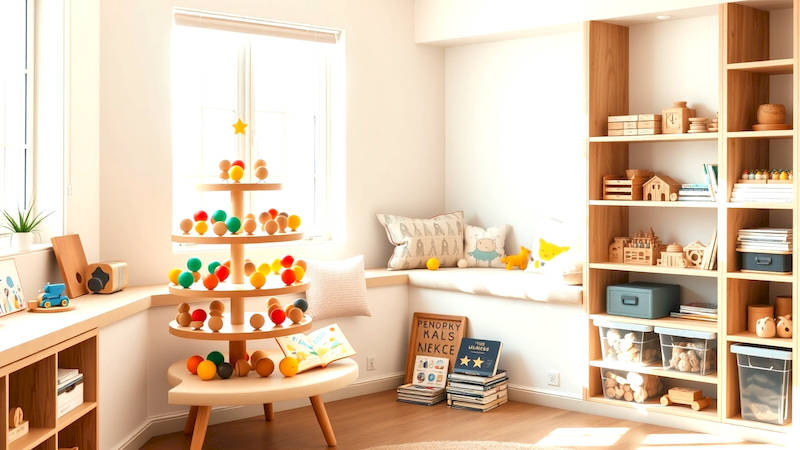
Consider utilizing vertical space with shelves to maximize storage and visibility. Clear bins or baskets are preferable to opaque containers, as they allow children to easily see what's inside. Label these containers clearly with pictures or words, depending on your child’s age and reading ability. The physical organization of the space is just as important as the rotation itself; a well-organized room fosters a more mindful and enjoyable play experience.
Implementing the Rotation: The Swap and the Reveal
The rotation process itself can be fun and exciting! Announce “Toy Swap Day” with enthusiasm, making it a special event. Before swapping, put away the toys that are being rotated into storage, out of sight—this is crucial to recreating the “newness” effect. Then, reveal the new selection of toys with a flourish. Consider creating a “treasure hunt” element, hiding the new toys around the room for your child to discover.
When choosing which toys to rotate in, aim for variety. Include a mix of different categories and play styles. For example, don’t just rotate in building toys; include a puzzle, a set of art supplies, and a few imaginative play items. This provides a well-rounded play experience and caters to different interests. Consider your child’s current developmental stage and choose toys that align with their evolving skills and abilities. A thoughtful selection shows your child that you understand and support their play needs.
Pay attention to your child’s reactions during the swap. What toys are they most excited about? Which ones are they hesitant to let go of? This feedback can inform your choices for future rotations. Documenting the rotation schedule and which toys were rotated in and out can also be helpful for maintaining a balanced system and avoiding repeating the same combinations too frequently.
Maintaining the System: Ongoing Decluttering and Adaptation
A rotating toy system isn’t a “set it and forget it” solution. It requires ongoing maintenance and adaptation. Regularly assess the toys that are being rotated through. Are certain toys consistently ignored? If so, it might be time to donate them. Similarly, are there toys that are constantly requested? Consider keeping those in more permanent rotation. Remember to periodically revisit the initial decluttering process, as children outgrow toys and develop new interests.
Seasonal changes can also be a natural trigger for toy rotations. Swap out summer-themed toys for winter-themed toys, or introduce a new set of toys to coincide with a holiday. This keeps the system fresh and exciting. Involve your child in the maintenance process, asking for their input and giving them a sense of ownership. This empowers them to take responsibility for their belongings and fosters a positive relationship with organization.
Be flexible. Life happens, and there will be times when the rotation schedule gets disrupted. Don’t stress about it. Simply pick up where you left off. The goal is to create a system that works for you and your family, not to adhere to a rigid set of rules. A little bit of flexibility can go a long way in ensuring the long-term success of your rotating toy system.
Addressing Common Challenges and Counterarguments
One common challenge is dealing with grandparents or other relatives who tend to over-gift toys. Politely explain your family’s philosophy of less is more, and perhaps suggest alternative gift ideas, such as experiences (museum visits, classes) or consumable items (art supplies, books). Another concern is the perceived “deprivation” of limiting access to toys. However, remember the research demonstrating that fewer toys can actually lead to more creative play. The goal isn’t to restrict, but to curate.
Some might argue that a toy rotation system requires too much effort. While it does involve an initial time investment, the long-term benefits—reduced clutter, increased engagement, and a more peaceful home—are well worth the effort. Furthermore, once the system is established, it becomes a relatively simple and routine process. It’s about shifting your mindset from accumulating toys to intentionally offering a selection that fosters creative and meaningful play. And finally, remember that imperfection is okay. Don’t get discouraged if your system isn’t perfect right away. Adjust and adapt as needed, and celebrate small victories along the way.
In conclusion, implementing a rotating toy system isn't merely about tidying up a playroom; it's about cultivating a more intentional and enriching childhood experience. By strategically decluttering, categorizing, and rotating toys, parents can combat the negative effects of overstimulation and foster creativity, focus, and appreciation. Remembering that novelty sparks engagement, a system built on continuous refinement and adaptation—informed by observing your child’s evolving interests—will provide ongoing benefits. The initial effort yields a more organized and calming environment, promoting a healthier relationship with possessions, and ultimately, more joyful playtime for everyone involved. Start small, be consistent, and remember: the goal isn’t to have fewer toys, but to make the toys you do have more meaningful.
Deja una respuesta