
How to Organize Small Appliances Inside Kitchen Cabinets
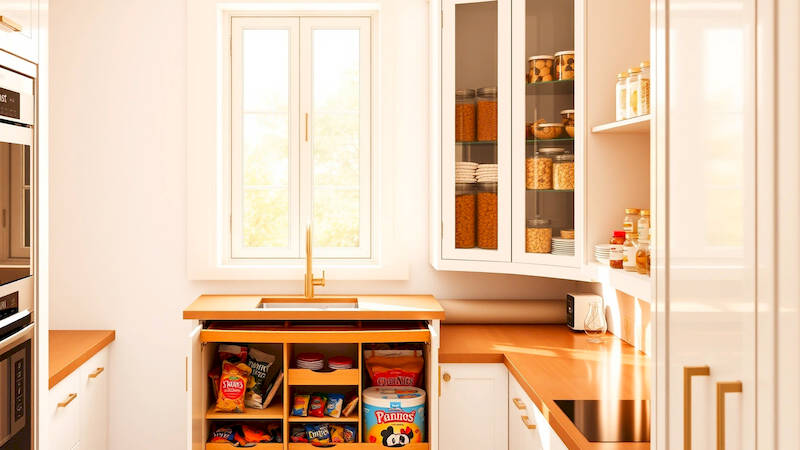
The kitchen, often hailed as the heart of the home, can quickly become a source of stress if not properly organized. Among the biggest challenges homeowners face is managing the ever-growing collection of small appliances – from stand mixers and blenders to food processors and slow cookers. These gadgets, while incredibly useful, can quickly consume valuable cabinet space, leading to cluttered shelves, frustrating searches, and even potential safety hazards. Efficiently organizing these items isn’t merely about aesthetics; it’s about optimizing your kitchen workflow, preserving appliance longevity, and reclaiming your peace of mind.
A poorly arranged kitchen impacts more than just your cooking experience. Studies show that a cluttered environment can increase stress levels and reduce productivity. In fact, The Princeton Neuroscience Institute found a direct link between clutter and difficulty focusing. Optimizing space for small appliances sheds light on overall kitchen organization, creating an environment that's inviting and functional. This article provides a comprehensive guide to effectively organizing small appliances within your kitchen cabinets, transforming chaotic storage into an efficient and accessible system.
- Assessing Your Appliance Collection and Cabinet Space
- Leveraging Vertical Space with Adjustable Shelving & Risers
- Prioritizing Accessibility: Zoning and Appliance Rotation
- Cord Management Solutions for a Tidy Appearance
- Utilizing Cabinet Door Space with Organizers
- Maintaining Your System: Regular Decluttering and Reassessment
- Considering Alternatives: Appliance Garages and Rolling Carts
Assessing Your Appliance Collection and Cabinet Space
Before diving into reorganization, a thorough assessment is crucial. This involves both cataloging your small appliances and evaluating the available cabinet space. Begin by removing everything from the cabinets you plan to use for appliance storage. This complete removal allows for a clear visual understanding of the space and prevents you from simply shifting clutter around. Then, carefully examine each appliance and honestly assess its usage frequency. A gadget used only once a year is a prime candidate for relocation – perhaps to a less accessible storage area.
Next, categorize your appliances based on size, shape, and frequency of use. Create three piles: "Daily/Weekly Use," "Monthly Use," and "Rarely Used." This categorization will dictate how you allocate space within your cabinets. Simultaneously, measure the internal dimensions of your cabinets – height, width, and depth – and note shelf adjustability. Understanding these dimensions will help determine what types of organizational tools will be most effective. Don’t forget to consider the weight capacity of your shelves; heavy appliances require sturdy storage solutions.
Finally, consider the cabinet's proximity to electrical outlets. Appliances you use frequently will benefit from being stored closer to an outlet, minimizing the hassle of cord management. This initial assessment is perhaps the most important step, laying the foundation for a successful and sustainable organizational system. According to professional organizer Marie Kondo, “The goal is to simplify your life, and that starts with decluttering.”
Leveraging Vertical Space with Adjustable Shelving & Risers
One of the most significant gains in kitchen organization comes from maximizing vertical space. Standard kitchen cabinets often have significant unused space between shelves. Adjustable shelving is a game-changer in this scenario. If your cabinets lack adjustable shelves, consider installing aftermarket shelf supports. This allows you to customize the space to perfectly accommodate your appliances, eliminating wasted headroom.
Beyond adjustable shelving, shelf risers are incredibly effective for creating tiered storage. These risers come in various materials - wire, plastic, or metal - and allow you to stack appliances or store smaller items above or below larger ones. For example, a blender base can be placed on the lower shelf, while smaller attachments and the pitcher are stored on a riser above it. Consider using different riser heights to accommodate varying appliance sizes.
Another tactic is to use under-shelf baskets. These baskets hook onto existing shelves, providing additional storage for smaller items like appliance cords, manuals, or accessories. Utilizing this overlooked space drastically increases storage capacity without requiring significant modifications. Remember to prioritize frequently used items on the most accessible shelves and risers.
Prioritizing Accessibility: Zoning and Appliance Rotation
Once you've maximized space, it's time to implement a system based on accessibility and usage. "Zoning" is a crucial principle in kitchen organization. Designate specific cabinets for specific appliance categories. For example, one cabinet could be dedicated to baking appliances (stand mixer, hand mixer, food processor), while another could house breakfast and smoothie-making appliances (blender, toaster).
Following the categorization from your initial assessment, place "Daily/Weekly Use" appliances within easy reach – generally at eye level or slightly below. "Monthly Use" appliances can be stored on higher or lower shelves, while "Rarely Used" items can be relegated to less accessible locations. Implementing an appliance rotation system can also be beneficial. When you retrieve an appliance, return it to its designated spot immediately after use. This simple habit prevents clutter from accumulating.
Consider front-to-back arrangement. The appliances you use most often should be placed towards the front of the cabinet, while less-used appliances can be stacked behind them. This keeps the most essential items readily available for quick access.
Cord Management Solutions for a Tidy Appearance
The bane of kitchen cabinet organization for appliances often lies in the tangle of cords. Unruly cords not only look messy but can also pose a safety hazard. Several solutions can mitigate this issue. Initially, ensure all appliances have their cords partially or fully retracted when stored. If cords are longer than necessary, use cord organizers, such as cord winders or Velcro straps, to neatly bundle and shorten them.
Inside the cabinet, consider installing cord clips on the cabinet walls to keep cords from dangling or getting tangled. These clips are inexpensive and easy to install. Alternatively, use cable sleeves to bundle multiple cords together, creating a more streamlined appearance. For appliances stored near outlets, utilize cord concealers to hide excess cord length and maintain a clean aesthetic. Proper cord management not only improves the appearance of your cabinets but also minimizes the risk of tripping or accidental appliance damage.
Utilizing Cabinet Door Space with Organizers
Don't overlook the often-underutilized space on the inside of cabinet doors. A variety of door-mounted organizers can add significant storage capacity for appliance accessories or smaller, frequently used items. Spice racks, designed for jars, can be repurposed to hold blender cups, small food processor bowls, or even measuring cups.
Over-the-door organizers with pockets are ideal for storing appliance manuals, recipe cards, or cleaning supplies specifically for appliance maintenance. Magnetic knife strips can also be adapted to hold metal appliance attachments. Ensure that the organizers you choose are compatible with your cabinet door thickness and weight capacity. Prioritize lightweight items for door storage to avoid stressing the hinges. Carefully consider what you are hanging, ensuring it won't interfere with easy cabinet closure.
Maintaining Your System: Regular Decluttering and Reassessment
Organizing your kitchen cabinets is not a one-time event; it’s an ongoing process. A successful organizational system requires regular maintenance and periodic reassessment. Schedule a decluttering session every six months to evaluate your appliance usage and identify items that can be donated, sold, or repurposed. Ask yourself: "Have I used this appliance in the last six months?" If the answer is no, it’s likely time to let it go.
Regularly assess whether your current system is still meeting your needs. As your kitchen and appliance collection evolve, your organizational strategies may need to adapt. Don't be afraid to experiment with different configurations or organizational tools to find what works best for you. According to The Container Store’s organization experts, even small, consistent decluttering efforts can dramatically impact the overall organization of a space.
Considering Alternatives: Appliance Garages and Rolling Carts
If cabinet space remains a significant constraint, consider alternative storage solutions. An “appliance garage” – a dedicated cabinet section with roll-up doors – can conceal frequently used appliances while keeping them readily accessible. These garages are particularly useful for bulky appliances like coffee makers or toasters.
Rolling carts also offer flexible storage. They can be moved around the kitchen as needed and provide ample space for larger appliances. When not in use, the cart can be tucked away in a pantry or corner. However, ensure the cart has sturdy wheels and a stable design, especially when loaded with heavy appliances. Ultimately, the best storage solution depends on your individual kitchen layout, appliance collection, and budget.
In conclusion, organizing small appliances within kitchen cabinets requires a strategic approach encompassing assessment, space maximization, zoning, cord management, and ongoing maintenance. By implementing these techniques, you can transform a cluttered chaos into a functional and inviting kitchen space. Remember to prioritize accessibility, leverage vertical space, and embrace a mindset of regular decluttering. The key takeaway is that a well-organized kitchen isn’t just about aesthetics; it’s about streamlining your cooking experience, reducing stress, and ultimately, making your home a more enjoyable place to be. Start with the initial assessment, and then gradually implement the strategies outlined in this guide. A little effort can go a long way toward creating a kitchen that truly works for you.
Deja una respuesta