
Organizing Kids' Backpacks and School Supplies in the Entryway
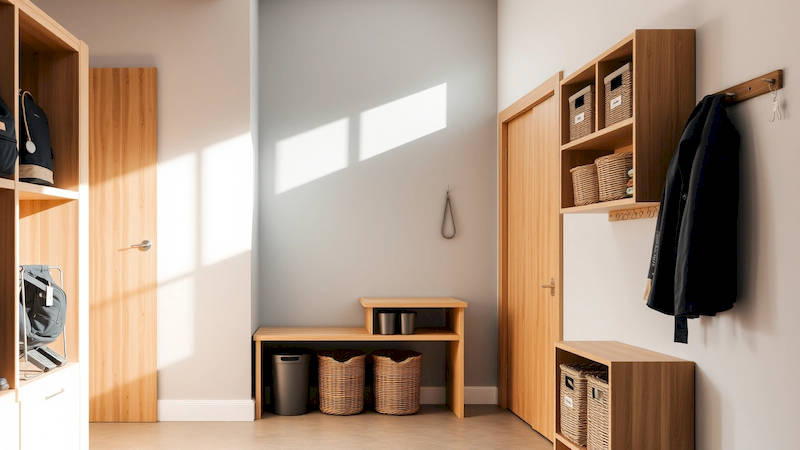
The entryway or mudroom often becomes ground zero for school-related clutter. Backpacks, lunchboxes, jackets, and a scattering of papers take over, transforming what should be a welcoming space into a daily obstacle course. This isn’t just an aesthetic problem; a disorganized entryway can contribute to morning stress, lost assignments, and a general feeling of overwhelm for the whole family. Establishing a functional and organized system for managing kids' school essentials isn't simply about tidiness – it's about setting the stage for a smoother, more productive school year and fostering a sense of responsibility in children.
The challenge lies in creating a system that works with your family's routines, not against them. It needs to be easy for kids to maintain, even with minimal prompting, and readily accessible for busy parents. Beyond just storage, a well-planned system considers workflow – how items come into the house, where they’re stored, and how they’re retrieved. Ignoring this workflow often leads to systems quickly falling into disrepair. Consider the age and independence level of your children when designing your solution; a system for a preschooler will look very different from one for a middle schooler.
This article delves into comprehensive strategies for organizing kids’ backpacks and school supplies within the entryway or mudroom, offering practical advice, step-by-step implementation guidance, and insights to help you reclaim control of this critical household space. We will cover everything from maximizing vertical space to implementing daily routines, ensuring you have the tools to create a calm and organized start to each school day.
- Assessing the Current Situation & Establishing Goals
- Maximizing Vertical Space: The Power of Wall-Mounted Solutions
- Implementing a Backpack “Landing Zone”
- Streamlining School Paper Management
- Creating Individual Supply Stations
- Establishing Routines and Maintaining Consistency
- Conclusion: A Streamlined Start to a Successful School Year
Assessing the Current Situation & Establishing Goals
Before diving into solutions, take a realistic assessment of your current entryway's strengths and weaknesses. Is the space cramped, or do you have ample room? What existing storage do you have, and how effectively is it being utilized? What are the biggest pain points – the constant tripping over backpacks, the lost permission slips, the frantic morning searches for overdue homework? Understanding why things are chaotic will guide your organizational choices. A helpful exercise is to time yourself completing a typical morning routine. Where are the bottlenecks? These insights are invaluable.
Furthermore, define clear goals. What does success look like? Is it a completely empty floor, a designated spot for everything, or simply a reduction in morning stress? Be specific. For instance, instead of "a tidier entryway," aim for “all backpacks hung up immediately after school” or “papers sorted and filed every evening.” Involve your children in this goal-setting process; their input increases buy-in and fosters a sense of ownership. This collaborative approach is crucial, as the system's success depends on everyone's participation.
Finally, consider the long-term outlook. Recognize that needs will evolve as children grow and their school requirements change. Choose a system that is adaptable and scalable, allowing for adjustments as needed. This foresight will save you from having to completely overhaul your organizational efforts every few years.
Maximizing Vertical Space: The Power of Wall-Mounted Solutions
One of the most effective strategies for entryway organization is to utilize vertical space. Often, the floor becomes cluttered because there isn’t sufficient storage at eye level or higher. Wall-mounted hooks are your best friend – individual hooks for each child’s backpack, jacket, and even their reusable lunch bag. Opt for sturdy hooks that can bear the weight of fully loaded backpacks. Labeling the hooks with each child's name adds a personalized touch and helps reinforce responsibility. Consider different hook styles; over-the-door hooks can be a useful temporary solution, while screw-in hooks provide more stability and a cleaner look.
Beyond hooks, explore shelving options. Floating shelves provide a minimalist look and offer space for storing bins containing supplies like hats, gloves, scarves, or extra school items. A gallery rail with S-hooks is another versatile option, allowing you to hang pouches for smaller items such as pencils, erasers, and hand sanitizer. Encourage children to utilize these spaces themselves. For younger children, display picture labels on bins to help them identify where items belong. A study by the Container Store reported that families who invest in well-defined storage systems experience a 30% reduction in household stress related to clutter.
Consider a wall-mounted organizer specifically designed for mail and papers. This keeps important school notices and permission slips from getting lost in the shuffle. Look for organizers with multiple slots or pockets to categorize documents – “To Do,” “Read,” and “File.”
Implementing a Backpack “Landing Zone”
The core of any successful system is a designated "landing zone"—a specific spot where backpacks are always placed upon entering the house. This is non-negotiable. Without a designated spot, backpacks will inevitably end up wherever there’s space – the kitchen counter, the dining room chair, or, worst of all, blocking the doorway. A bench with built-in cubbies is an ideal solution, providing seating for removing shoes and storage for backpacks and other items. However, this isn't always feasible; a simple set of hooks and a small rug defining the area can be equally effective.
Critically, the landing zone should be near the entryway door. The closer it is to the point of entry, the more likely students are to use it consistently. Visually cue your children to use it. A brightly colored rug, a decorative sign, or even simply a fresh coat of paint can help draw attention to the designated area. To further reinforce habit formation, establish a daily routine: immediately upon entering the house, backpacks go on hooks, shoes go under the bench (or on a shoe rack), and jackets are hung up. Consistency is key; this takes time and gentle reminders, but it will become automatic with practice.
Furthermore, incorporate a “check-out” routine. Before leaving for school, children should review their backpacks to ensure they have all necessary materials. This simple step can prevent forgotten assignments and last-minute scrambling.
Streamlining School Paper Management
School papers are a constant source of clutter. Permission slips, artwork, graded assignments – the volume can be overwhelming. The key is to avoid letting them pile up. Establish a daily sorting routine. Upon arrival home, go through the papers with your child. Immediately discard any unnecessary papers (flyers for events you won't attend, duplicate copies). Categorize the remaining papers into “Action,” “Reference,” and “Keep.” "Action" papers require a response – a signed permission slip, a completed form. "Reference" papers contain important information you may need to access later, such as school calendars or contact lists. "Keep" papers are special items, like artwork or exceptional schoolwork that you want to preserve.
Invest in a filing system to manage the "Reference" and "Keep" categories. A simple accordion file folder labeled with subjects or grade levels can be effective. For artwork, consider a rotating display system, showcasing a few pieces at a time and storing the rest in a portfolio or designated bin. Digitalization can also be helpful; scan important documents and artwork to create a digital archive, reducing the amount of physical clutter. According to a study in the Journal of Environmental Psychology, reducing visual clutter can significantly improve focus and reduce stress levels.
Don't be afraid to be ruthless. Most school papers will eventually become irrelevant. Regularly purge the files and discard anything that is no longer needed.
Creating Individual Supply Stations
While some school supplies are best kept in the classroom, others—pencils, erasers, colored pencils, and rulers—can benefit from a designated home base within the entryway. This simplified access encourages responsibility and minimizes last-minute hunts. Utilize small bins, caddies, or drawer organizers to create individual supply stations for each child. Label each container clearly with the child’s name and the type of supplies it contains.
These stations don’t need to be elaborate; even a few labeled pencil cases placed on a shelf can make a significant difference. Consider a tiered organizer to maximize space and visibility. Encourage children to replenish their supplies regularly to ensure they have everything they need. This is an excellent opportunity to teach organizational skills and responsibility.
Furthermore, create a central location for shared supplies - glue sticks, scissors, tape, and extra notebooks. This prevents each child from having duplicate items and simplifies restocking. Regularly assess the shared supply levels and replenish as needed.
Establishing Routines and Maintaining Consistency
The most beautifully organized entryway will quickly descend into chaos without consistent routines. Implement a daily tidy-up time – 10-15 minutes each evening dedicated to resetting the space. This involves hanging up backpacks, putting away shoes, sorting papers, and replenishing supplies. Make it a family affair; everyone pitches in to maintain order.
Incorporate routines into your child’s morning and afternoon schedules. For example, “backpack check” should be a non-negotiable part of the morning routine. This ensures they have all necessary materials before leaving for school. Similarly, “paper sort” should be a part of the afternoon routine, preventing papers from piling up. Consistency is paramount. According to behavioral psychologists, routines help reduce cognitive load and improve efficiency.
Regularly revisit and refine your system. What's working well? What needs improvement? Don't be afraid to experiment and adjust your approach as needed. The goal is to create a sustainable system that works for your family, making the entryway a functional and welcoming space.
Conclusion: A Streamlined Start to a Successful School Year
Organizing kids' backpacks and school supplies in the entryway is more than just about aesthetics; it's about creating a more peaceful and efficient home environment. By assessing your current needs, maximizing vertical space, establishing designated zones, streamlining paper management, and fostering consistent routines, you can transform a chaotic entry into a functional and organized hub. Remember that involving your children in the process is essential, fostering a sense of ownership and responsibility.
The key takeaways are to prioritize accessibility, simplicity, and sustainability. Don’t aim for perfection, but rather for a system that minimizes stress and makes mornings run more smoothly. Start small, focusing on one area at a time, and be patient. Implementing these strategies will not only improve the organization of your entryway but also contribute to a more positive and productive school year for the entire family. Take action today and reclaim control of your entryway – and your peace of mind.
Deja una respuesta