
Essential Cookware for a Minimalist Kitchen: What You Really Need
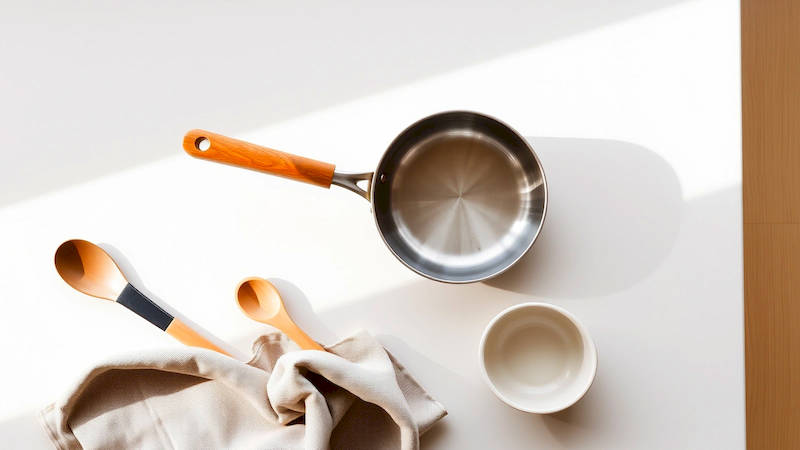
The pursuit of a minimalist lifestyle extends beyond decluttering living spaces; it’s about intentionality in all areas of life, including the kitchen. Too often, our kitchens become repositories for gadgets and tools we rarely use, contributing to visual clutter and a sense of overwhelm. A minimalist kitchen isn’t about deprivation, it’s about equipping yourself with the right tools – high-quality, versatile pieces that can handle the majority of your cooking needs, freeing up space and simplifying the culinary experience. This isn’t about letting go of the joy of cooking, but about streamlining the process and focusing on quality over quantity.
The average American household owns over 20 kitchen gadgets, many used less than once a year, according to a 2022 survey by Statista. This illustrates a common problem: we accumulate based on perceived need, rather than actual usage. Shifting to a minimalist approach means questioning every item’s purpose and ensuring it earns its place in your limited kitchen space. This article delves deep into the essential cookware needed for a truly minimalist kitchen, offering guidance on selection, materials, and how to define your own ‘essential’ list based on your personal cooking style.
- The Foundation: A High-Quality Saucepan & Sauté Pan
- The All-Rounder: A Versatile Skillet
- The Humble Baking Sheet: More Than Just Cookies
- The Cutting Board Essential: A Solid Surface
- The Utensils: Embracing Function Over Form
- The Optional, But Valuable: A Dutch Oven
- Concluding Summary: Intentionality in the Kitchen
The Foundation: A High-Quality Saucepan & Sauté Pan
A good saucepan and a versatile sauté pan are the absolute cornerstones of any kitchen, minimalist or otherwise. These aren't just nice-to-haves; they’re the workhorses you’ll use for the vast majority of your cooking tasks, from simmering sauces to frying vegetables to boiling pasta. Focusing on quality here is paramount. Investing in a single, well-made pan in each category will far outweigh the benefit of owning multiple, cheaper alternatives that will likely warp, lose their non-stick coating, or distribute heat unevenly over time.
Consider a 3-quart saucepan with a lid. This size is ideal for smaller portions and everyday tasks like reheating leftovers, cooking grains, or making sauces. For a sauté pan, a 12-inch diameter is a sweet spot – large enough to accommodate a decent amount of food but not so large as to take up excessive storage space. Stainless steel is a particularly good choice for both, known for its durability, non-reactivity with foods, and ability to distribute heat evenly. While non-stick can be useful, it often requires more frequent replacement.
Look for pans with comfortable, sturdy handles and oven-safe capabilities. This extends the versatility of the pan, allowing you to seamlessly transition dishes from stovetop to oven. Ultimately, a quality saucepan and sauté pan will allow a home cook to perform around 80% of common kitchen tasks according to culinary professionals.
The All-Rounder: A Versatile Skillet
While the sauté pan excels in many areas, a dedicated skillet, particularly cast iron, adds another layer of capability to your minimalist kitchen toolkit. Cast iron skillets are renowned for their exceptional heat retention, making them perfect for searing meats, baking cornbread, and achieving a beautiful, crispy crust on everything from pancakes to frittatas. They’re also incredibly durable; a well-seasoned cast iron skillet can last a lifetime, becoming a cherished heirloom.
Beyond its impressive performance, a cast iron skillet’s versatility is unmatched. It can be used on the stovetop (gas, electric, induction), in the oven, and even over a campfire. This multi-functionality is precisely the kind of attribute that aligns with a minimalist philosophy. Modern cast iron options are often pre-seasoned, making the initial break-in period less daunting.
However, cast iron does require some maintenance. The key to a successful cast iron skillet is proper seasoning and consistent care. Avoid using soap, and dry thoroughly after each use. A little oil rubbed in after drying will help maintain the seasoning. While the maintenance may seem like a draw back, the benefits of durability and versatility will quickly outweigh any initial reservation.
The Humble Baking Sheet: More Than Just Cookies
A baking sheet is often relegated to cookie baking duty, but a good quality, heavy-gauge baking sheet is surprisingly versatile. It can be used for roasting vegetables, baking sheet dinners (think sheet pan salmon with asparagus), toasting nuts, and even as a temporary cooling rack. Choose one that's large enough to accommodate the typical amount of food you cook for your household - a standard 18” x 13” size works well for most.
Specifically, look for a baking sheet made from aluminum or stainless steel. Avoid non-stick coatings, which tend to deteriorate over time. Instead, line the sheet with parchment paper or a silicone baking mat for easy release and cleanup. The weight of the baking sheet is also important; a heavier gauge sheet will resist warping at high temperatures. Investing in a durable baking sheet will prove essential to a generalized and streamlined kitchen.
Don't underestimate the power of sheet pan dinners - they minimize dishwashing and simplify meal prep. Combining protein and vegetables on a single sheet creates a complete and satisfying meal with minimal effort, directly supporting the minimalist principle of efficiency.
The Cutting Board Essential: A Solid Surface
While not technically “cookware,” a high-quality cutting board is an integral part of any kitchen and crucial for a minimalist setup. Opt for a single, large cutting board made from wood or a durable, non-porous plastic. A large surface minimizes the need for multiple boards and offers ample space for chopping and prepping ingredients.
Wooden cutting boards are aesthetically pleasing and gentle on your knives, but they require regular oiling to prevent drying and cracking. Bamboo cutting boards are a sustainable alternative to traditional wood. Plastic cutting boards are easier to sanitize and dishwasher-safe, making them a practical choice for those prioritizing convenience.
Regardless of the material you choose, a single, well-maintained cutting board simplifies food preparation and eliminates the need for a cluttered collection of smaller boards. Ensure you have a dedicated cutting board for raw meats to prevent cross-contamination. Maintaining a single, sanitary cutting surface will streamline sanitation best practices.
The Utensils: Embracing Function Over Form
When it comes to utensils, prioritize functionality and durability. A minimalist approach means foregoing specialized gadgets in favor of a curated collection of essential tools. A few key pieces include a sturdy chef's knife, a paring knife, a wooden spoon, a silicone spatula, a whisk, and a pair of tongs.
Avoid buying sets; they often contain items you won’t use. Instead, select each utensil individually based on its quality and purpose. A chef's knife is the most versatile knife in the kitchen, capable of handling a wide range of tasks – chopping, slicing, dicing, and mincing. A paring knife is ideal for smaller tasks like peeling fruits and vegetables. The wooden spoon and silicone spatula are gentle on cookware, while the whisk and tongs are essential for mixing, flipping, and serving.
Consider investing in magnetic knife strips for safe and efficient storage, freeing up drawer space. Remember, quality instruments can elevate the cooking experience and contribute to a more intentional and enjoyable culinary practice.
The Optional, But Valuable: A Dutch Oven
A Dutch oven, while not strictly essential for everyone, is a highly versatile piece of cookware that can significantly expand your culinary repertoire. Perfect for braising meats, making soups and stews, baking bread, and even deep-frying, a Dutch oven can replace multiple specialized pots and pans.
Enameled cast iron Dutch ovens are particularly popular, offering excellent heat retention and easy cleanup. They're also aesthetically pleasing and can be used for both stovetop and oven cooking. A 5- to 7-quart Dutch oven is a good size for most households.
The initial investment in a Dutch oven can be substantial, but its versatility and durability make it a worthwhile addition to a minimalist kitchen. If you enjoy slow-cooked meals or bread baking, a Dutch oven is an excellent investment. However, note that if you rarely cook these types of dishes it may not justify the space it occupies.
Concluding Summary: Intentionality in the Kitchen
Building a minimalist kitchen isn’t about sacrificing your culinary creativity; it’s about being intentional with your tools and resources. By focusing on high-quality, versatile cookware, you can streamline your kitchen, reduce clutter, and simplify your cooking experience. Remember that the essentials – a great saucepan, sauté pan, skillet, baking sheet, cutting board, and a curated collection of utensils – will form the foundation of your minimalist kitchen.
The key takeaways are to prioritize quality over quantity, choose durable materials, and only keep what you actively use. Consider your personal cooking style and select cookware that aligns with your needs. Regularly evaluate your kitchen equipment and remove anything that isn't serving a purpose. The goal is to create a space that empowers you to cook with confidence and joy, free from the distractions of excessive clutter. Embrace the intentionality, simplify your approach and rediscover the pleasure of cooking.
Deja una respuesta